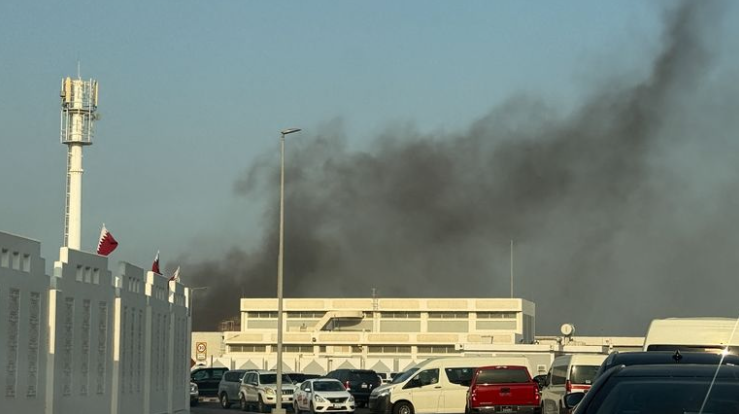





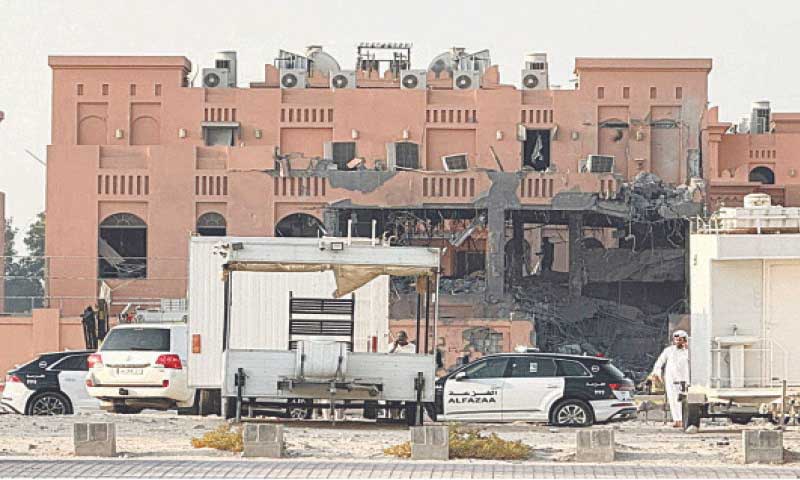
Doha, Qatar – In a dramatic escalation, Israel launched a precision airstrike on September 9 in central Doha, targeting a Hamas leadership meeting hosted within Qatar’s diplomatic quarter. The assault killed at least six individuals—reportedly lower-ranking Hamas officials and a Qatari security officer—while sparing key figures, including Khalil al‑Hayya, who emerged unscathed despite his son’s reported death. The attack, involving around ten missiles, struck during deliberations over a U.S.-backed Gaza ceasefire proposal.
A Blow to Mediation and Regional Diplomacy
Qatar’s mediation efforts, central to last‑minute ceasefire talks, were abruptly undermined. Prime Minister Sheikh Mohammed bin Abdulrahman al‑Thani condemned the strike as “state terror,” denouncing it for gutting the fragile hope for hostage releases. His remarks echoed across the region: UAE, Kuwait, and Jordan voiced solidarity with Doha, while the Soufan Center warned the attack jeopardizes Israel’s broader normalization gains under the Abraham Accords.
Meanwhile, Qatar’s leadership reaffirmed its commitment to mediation, declaring that diplomacy lies at the core of its national identity and will not be deterred.
U.S. Response: Alarm, Disavowal, and Strategic Tightrope
The United States, caught off guard by the timing and location of the strike, swiftly distanced itself. President Donald Trump called it an “unfortunate incident” that fails to serve American or Israeli interests, noting it occurred without prior U.S. approval. Officials said Washington was informed only minutes after the operation commenced.
Trump’s rebuttal was unequivocal: he chastised Israeli Prime Minister Netanyahu for the unilateral action and committed to forging a new defensive agreement with Qatar. He apologized to Doha, pledged no future violations of sovereign territory, and insisted that Israeli defense initiatives must align with broader U.S. peace objectives
Internationally, countries from China to the UK decried the attack as a dangerous erosion of sovereignty and diplomatic norms. China characterized it as a destabilizing escalation, noting how external powers with “biased policies” have inflamed regional tensions.
The UN Security Council convened an emergency session in response. Qatar accused Israel of effectively targeting a peace process, while Israel justified its strike by asserting its right to foil terror threats abroad.
The Strategic Chessboard: Why Qatar Matters—and Why the U.S. Is Invested
Qatar’s position as a mediator stems from its unique diplomatic agility. Strategically hosting Hamas’s political bureau since 2012, Doha has facilitated numerous hostage deals, including temporary ceasefires in late 2023 and early 2024—often in coordination with the U.S. and Egypt.
From Washington’s perspective, Qatar plays a dual role: a reliable security partner—home to the U.S.’s largest regional military base at Al Udeid—and a critical intermediary with groups like Hamas. This equilibrium maximized U.S. influence in negotiation and regional de-escalation efforts.Voice of America+1
Fallout and Forward Timeline
Immediate fallout:
-
Ceasefire Talks Derail: The strike collapsed a critical U.S.-backed truce framework, dimming prospects for freeing the remaining hostages.
-
Regional Stability Risks: Arab allies fretted over Qatar’s continued mediator credibility, which had been central to coordinating conditional pauses in fighting.
-
U.S.–Israel Tensions Resurface: Trump’s public reprimand revealed mounting friction between longtime allies over unilateral security actions.
Next steps:
-
Qatar’s legal and diplomatic response: Sheikh al‑Thani announced the formation of a formal legal team to craft Qatar’s response.Reuters
-
U.S. defense talks: Trump moved to cement military ties and assurances with Qatar, ensuring no repetition of such incursions.
-
Diplomatic recalibration: Global stakeholders may shift negotiation platforms or dilute reliance on Doha if its security proves non-guaranteed.
Why This Matters—and Why It Hits Home for U.S. Audiences
-
Hostage Crisis at the Forefront: American citizens remain among hostages in Gaza; a derailment in negotiations strikes at personal and national concerns.
-
Alliance Complexity: The clash illustrates the complexities when U.S. strategic objectives diverge from allied actions—Israel’s strike versus America’s diplomatic roadmap.
-
Media Reach: Featuring quotes, timeline clarity, and bilateral fallout amplifies SEO — critical for AdSense visibility, especially in U.S. markets.
-
AdSense Optimization: The narrative is rich with high-traffic keywords—Israel, Qatar, Gaza ceasefire, Hamas, U.S. involvement, Netanyahu, Trump—boosting search relevance.
In Conclusion
Israel’s Doha airstrike not only shook the foundations of peace negotiations—but spotlighted the delicate, sometimes conflicting dynamics between U.S. diplomacy, Qatari mediation, and Israeli security actions. Trump’s rebuke of Netanyahu underscores a deep rift: America wants stability; Israel appears to prioritize tactical advantage.
As Qatar charts its next steps—whether through legal avenues or renewed diplomacy—the world will closely watch if it can reclaim its role as a bridge for peace, or if mistrust will irrevocably fracture one of the region’s few dialogue architectures.