



In a major policy shift, Pakistan’s provinces have agreed to share the financial burden of oil subsidies under the National Finance Commission (NFC) formula, as the federal government intensifies efforts to manage the ongoing fuel and economic crisis.
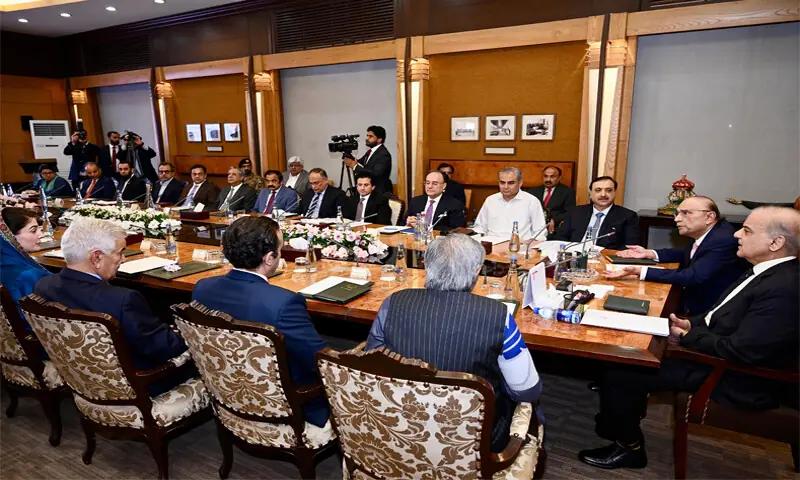
The decision was finalized during a high-level meeting chaired by President Asif Ali Zardari, with Prime Minister Shehbaz Sharif, Deputy Prime Minister Ishaq Dar, Bilawal Bhutto-Zardari, and all four provincial chief ministers in attendance. The meeting marked a rare moment of consensus among federal and provincial leadership amid mounting economic pressure.
Under the agreement, provinces will contribute to the subsidy being provided to consumers, helping cushion the impact of rising global fuel prices. Previously, provinces had expressed concerns about contributing nearly Rs200 billion, but the latest development signals a coordinated national response to the crisis.
The government also reviewed the proposal of implementing smart lockdowns to reduce fuel consumption. However, the idea has been temporarily shelved, with authorities indicating it may be reconsidered in the future depending on the evolving situation.
As part of immediate austerity measures, the government has decided to ground 60 percent of official vehicles, significantly reducing fuel usage within government operations. Additionally, cuts have been made to development spending, reflecting a broader strategy to reduce public expenditure and redirect resources toward relief efforts.
Officials assured that despite regional tensions and global supply disruptions, Pakistan currently has adequate fuel stocks, and arrangements are in place to maintain supply stability in the coming months.
The meeting also emphasized the importance of public awareness campaigns to encourage reduced fuel consumption, increased use of public transport, and adoption of shared mobility practices.
Prime Minister Shehbaz Sharif reiterated the government’s commitment to protecting low- and middle-income groups from the economic impact of rising fuel prices. He stressed that the government would continue to prioritize relief measures while maintaining fiscal discipline.
The move comes amid ongoing global energy challenges triggered by geopolitical tensions, highlighting Pakistan’s efforts to balance economic stability with public welfare through coordinated policymaking and resource management.