





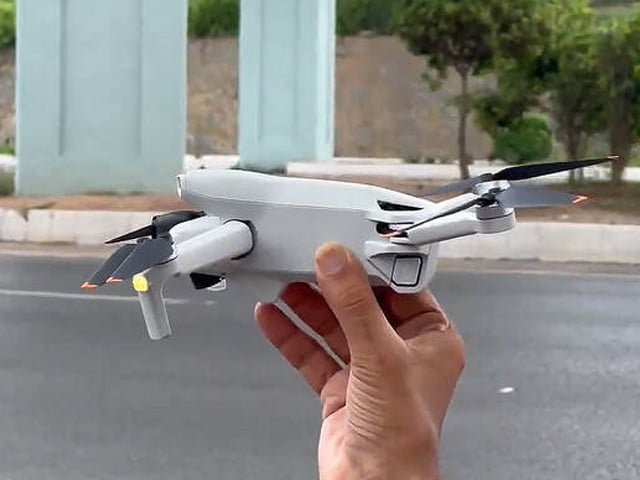
Sindh Police has announced plans to establish a dedicated Aerial Surveillance Wing aimed at strengthening crime monitoring and improving law enforcement efficiency across the province. The initiative focuses on round-the-clock observation of urban areas, highways, traffic flow, railway tracks, and riverine (kutcha) regions.
The decision was taken during a high-level meeting chaired by Inspector General of Sindh Police Javed Alam Odho, where senior officers were asked to submit detailed proposals for the structure and operation of the new unit. The meeting included participation from DIGs of Headquarters, Establishment, IT and Telecommunications, as well as representatives from the Safe City Authority.
During the session, officials were briefed on the current aerial surveillance capabilities and the potential use of advanced technologies such as drones and modern monitoring equipment. The presentation highlighted key aspects including operational objectives, training requirements, procurement processes, and the expected benefits of implementing an aerial surveillance system.
The IG emphasized that aerial and digital monitoring represents the future of modern policing. He noted that the introduction of such technologies would enhance the effectiveness, speed, and reliability of police operations. Continuous aerial observation is expected to play a crucial role in crime prevention, detection of suspicious activities, and rapid response to incidents.
In addition to crime control, the proposed wing will assist in traffic management, crowd control during public gatherings, and overall security monitoring. This will help improve public safety and ensure better protection of life and property.
To advance the project, Sindh Police will form a committee of senior officers responsible for finalizing the structure, standard operating procedures (SOPs), and operational framework of the Aerial Surveillance Wing. The initiative reflects a broader shift toward technology-driven policing in Pakistan.