




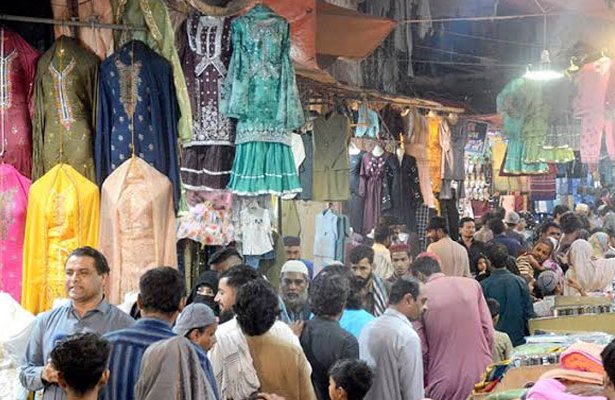
ISLAMABAD: A recent survey has found that 91% of Pakistanis consider doing business in the country difficult, with respondents identifying taxation, limited access to financing, energy costs, regulations and corruption among the major challenges facing businesses.
According to the survey conducted by the Institute of Public Opinion Research (IPOR), the complicated tax system emerged as the most frequently cited obstacle. Around 46% of respondents identified taxation as a major difficulty for businesses.
Limited access to loans and financing was cited by 19% of respondents, highlighting concerns over the ability of businesses to secure funds for operations, investment and expansion.
The survey also identified corruption as another significant barrier, with 12% of respondents pointing to it as a challenge. Meanwhile, 10% cited rising electricity and gas costs as a major difficulty for businesses operating in the country.
Government regulations were identified as a key obstacle by 7% of respondents, while 2% linked business difficulties to political instability.
The survey also found strong support for additional government measures to protect businesses. Around 76% of respondents said the government should introduce further legislation aimed at providing greater protection to businesses.
Concerns about Pakistan’s debt burden were also widespread. Approximately 66% of respondents said they were worried about the country’s increasing debt burden, reflecting broader public concerns about the state of the economy and government finances.
The survey further examined public perceptions of the International Monetary Fund (IMF) programme and its impact on Pakistan’s economic stability.
According to the findings, 30% of respondents considered the IMF programme harmful, while 19% viewed it as beneficial. Another 38% said they believed the programme had provided no benefit to the general public.
The findings reflect mixed public views about the IMF programme and its impact on ordinary citizens, while also highlighting concerns about the broader economic environment.
Overall, the survey points to taxation, access to financing, energy expenses, government regulations, corruption and economic uncertainty as major issues affecting perceptions of the business environment in Pakistan. The findings also indicate public demand for stronger measures to protect businesses and address wider economic concerns.