



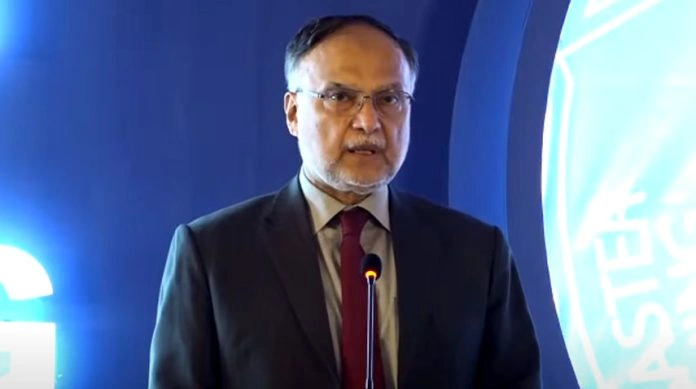
Federal Minister for Planning, Development and Special Initiatives Professor Ahsan Iqbal has called for the complete modernisation of Pakistan Railways’ Main Line-1 (ML-1), describing the project as a key national priority for expanding trade, freight capacity and regional connectivity.
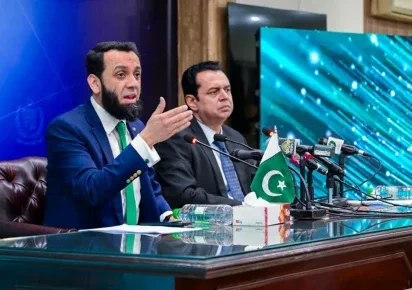
Speaking at the Development Partners Dialogue on “Advancing Trade, Tourism and Regional Competitiveness” during his three-day visit to Mongolia, Ahsan Iqbal presented Pakistan’s ML-1 modernisation plan and briefed development partners on progress towards upgrading the Karachi-Rohri section.
The minister said ML-1 is the backbone of Pakistan’s railway network, extending 1,726 kilometres from Karachi to Peshawar. According to figures presented by him, the route currently carries around 76 per cent of passenger traffic and 98 per cent of freight traffic despite significant infrastructure constraints.
Ahsan Iqbal said modernising ML-1 should be viewed as more than a railway infrastructure project because of its potential impact on Pakistan’s trade and economic growth. He stressed that a modern railway corridor could improve the movement of passengers and goods while strengthening links with regional markets.
Under the proposed upgrade, line capacity would increase from 34 to 120 train pairs. Passenger trains would be able to travel at speeds of up to 160 kilometres per hour, while freight speeds could rise from around 30 to 80 kilometres per hour.
The project is also expected to reduce travel time between Karachi and Rohri from approximately eight hours to about four and a half hours. Rising freight demand is another factor behind the proposed modernisation, with demand projected to reach around 21 million tonnes annually by 2035.
The Karachi-Rohri section is currently described as the most advanced part of the ML-1 modernisation plan. Ahsan Iqbal said the approximately $2.5 billion project had moved beyond the conceptual stage, with project readiness financing secured, engineering work undertaken and procurement and financing processes progressing.
The Asian Development Bank is leading the financing effort, while the Asian Infrastructure Investment Bank, World Bank, Islamic Development Bank and European Investment Bank are involved as potential co-financing partners.
Ahsan Iqbal stressed that Karachi-Rohri should not be treated as a standalone railway project. Instead, he said it should serve as the first step towards modernising the complete Karachi-Peshawar corridor.
The government is also working on a financing strategy for the remaining sections between Rohri and Peshawar. The minister said the focus should now be on implementation, maintaining financing continuity and completing ML-1 as an integrated railway corridor.
A fully modernised ML-1 could provide Pakistan with greater passenger and freight capacity while improving domestic transportation and supporting regional trade routes. The project is also linked to Pakistan’s wider efforts to strengthen economic cooperation and connectivity with countries across the region.
Ahsan Iqbal’s participation in the CAREC International Conference reflects Pakistan’s engagement with regional partners on infrastructure, trade, tourism and connectivity initiatives. The government is seeking greater cooperation with development partners to advance projects aimed at expanding Pakistan’s economic opportunities and regional links.