




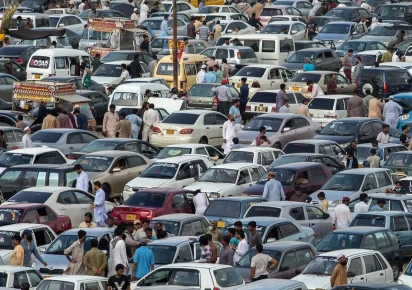
Pakistan’s automobile industry is witnessing a significant shift as Chinese electric vehicle (EV) and hybrid manufacturers rapidly expand their presence, posing a serious challenge to Japanese brands that have dominated the country’s market for more than three decades.
The growing interest in electric mobility comes amid rising global fuel prices and increasing concerns over energy security. As Pakistan continues to rely heavily on imported fuel, industry experts believe the transition towards electric vehicles has become both an economic and environmental necessity.
A major indicator of this shift is the recent arrival of approximately 2,000 New Energy Vehicles (NEVs) from Chinese manufacturer BYD, highlighting growing confidence in Pakistan’s emerging EV market. Several other Chinese manufacturers are also introducing electric and hybrid vehicles equipped with modern features, advanced safety systems, digital technology, and competitive pricing.
For decades, Japanese automakers maintained their leadership in Pakistan by offering reliable vehicles backed by extensive dealership networks, readily available spare parts, and strong resale value. However, analysts believe limited competition reduced innovation and kept vehicle prices relatively high.
Industry experts say Chinese manufacturers are changing consumer expectations by introducing vehicles featuring digital dashboards, intelligent connectivity, advanced driver-assistance systems (ADAS), panoramic displays, and modern designs at competitive prices.
Many analysts also point out that while several Japanese companies have primarily focused on hybrid technology, Chinese manufacturers have invested aggressively in battery technology and fully electric vehicles, allowing them to gain a competitive edge in global markets.
However, industry representatives argue that Japanese brands remain strong because of their well-established local manufacturing ecosystem, extensive localization, reliable after-sales service, and higher resale value. They also note that the slowdown in Pakistan’s automobile market has largely been driven by inflation, reduced purchasing power, high financing costs, and overall economic uncertainty rather than increased competition alone.
Experts caution that Pakistan still faces major hurdles before electric vehicles become mainstream. Limited charging infrastructure, high battery replacement costs, consumer concerns about resale value, and the need for supportive government policies continue to slow widespread EV adoption.
Automotive stakeholders have called on the government to introduce consistent EV policies, expand charging infrastructure, encourage local manufacturing, and provide incentives for cleaner transportation. They believe such measures will help Pakistan accelerate its transition towards sustainable mobility while attracting further investment into the automotive sector.