



The Khyber Pakhtunkhwa Assembly has passed a majority resolution seeking action against Punjab Chief Minister Maryam Nawaz under Article 6 of the Constitution, intensifying political tensions between the governments of Punjab and Khyber Pakhtunkhwa.
The resolution was approved during Friday’s session after the house suspended its scheduled agenda. KP Law Minister Aftab Alam Afridi moved the resolution during proceedings chaired by Speaker Babar Saleem Swati.
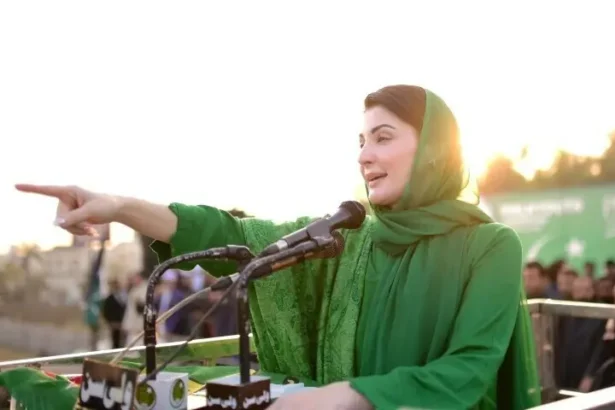
The resolution referred to recent remarks attributed to Maryam Nawaz regarding security threats faced by Punjab. She reportedly said that Punjab faced greater security threats from neighbouring provinces than from neighbouring countries and that terrorism had entered Punjab through its borders.
KP lawmakers strongly objected to the remarks, saying they could damage national unity and create resentment between provinces. They argued that statements of this nature could weaken the federation at a time when terrorism remains a national challenge.
The resolution also paid tribute to those who lost their lives fighting terrorism and stressed that the threat could only be defeated through coordinated efforts by all provinces and state institutions.
KP Housing Minister Amjad Ali criticised Maryam Nawaz and described her remarks as insulting to the people of Khyber Pakhtunkhwa. He demanded that the Punjab chief minister apologise on the floor of the assembly, questioning the suggestion that Punjab faced a greater security threat from other provinces than from neighbouring countries.
Amjad Ali also raised questions about the history of militancy in the region and the policies that contributed to the emergence of militant groups. He argued that groups once described as “Mujahideen” were later labelled terrorists as international circumstances changed.
KP Information Minister Shafi Jan also criticised the Punjab chief minister’s remarks. He alleged that the comments could provide political advantage to Indian Prime Minister Narendra Modi and questioned whether they were consistent with Pakistan’s broader position on terrorism.
Shafi Jan further claimed that such statements could potentially be used against Pakistan in international legal proceedings. He also highlighted the displacement of people during military operations in Khyber Pakhtunkhwa and alleged that displaced residents had previously faced restrictions when attempting to enter Punjab.
The assembly debate subsequently expanded beyond the remarks attributed to Maryam Nawaz and focused on the performance of key state institutions.
At the direction of the speaker, Law Minister Aftab Alam Afridi read out constitutional oaths associated with judges, the chief election commissioner and members of the armed forces. The speaker then questioned whether these institutions were properly fulfilling their constitutional responsibilities.
The issue of the Election Commission’s leadership was also raised. The law minister claimed that the chief election commissioner’s tenure had ended on January 26, 2025, but that the official remained in office.
Higher Education Minister Meena Khan said the dispute should not be viewed as being about a single individual. She argued that the issue concerned the interests of three provinces and broader challenges facing the state.
ANP lawmaker Muhammad Nisar also criticised Maryam Nawaz’s statement, describing it as an insult to the people of Khyber Pakhtunkhwa and Balochistan. He highlighted KP’s heavy losses from terrorism and questioned why the province continued to face serious security challenges while Punjab appeared comparatively more stable.
However, PML-N lawmaker Amna Sardar defended Maryam Nawaz. She said the Punjab chief minister had not specifically referred to Pakhtuns in her remarks and accused the treasury benches of deliberately misrepresenting her statement.
Amna Sardar maintained that references to Pakhtuns had been introduced during the political debate and that Maryam Nawaz’s original comments were being distorted to create controversy.
The passage of the resolution marks another escalation in political tensions between Punjab and Khyber Pakhtunkhwa. The dispute has also revived wider debates over provincial relations, terrorism, constitutional responsibilities and the need for coordinated efforts against security threats.