




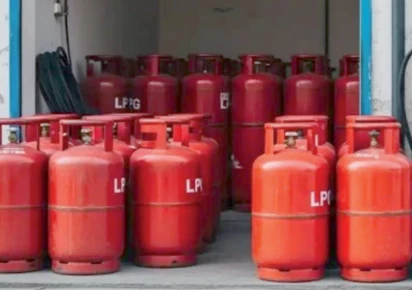
ISLAMABAD: Pakistan’s authorities have identified significant gaps in the existing liquefied petroleum gas (LPG) pricing mechanism, with officials warning that the current formula is creating market distortions and widening the difference between notified and actual consumer prices.
The issue was discussed during a meeting of the National Price Monitoring Committee (NPMC), where the Oil and Gas Regulatory Authority (Ogra) and Petroleum Division briefed officials on the country’s LPG pricing mechanism.
Officials said the difference between the notified price and the rate being charged in markets was mainly linked to the exclusion of import parity from the existing pricing formula.
The committee was informed that proposed changes to the LPG pricing policy have remained pending since 2023. According to the Petroleum Division, the original pricing framework was designed primarily for domestic LPG producers before subsequently being applied to importers.
Officials said applying the same framework to imported LPG had contributed to market distortions and significant differences between official and retail prices.
The price gap has been particularly visible in areas near the Iranian border. In Gwadar, LPG was reportedly selling for around Rs330 per kilogram, while the price in Turbat had reached approximately Rs350 per kilogram.
The committee was informed that these market rates were substantially higher than the prices notified by Ogra.
Following the discussion, the petroleum ministry, in consultation with Ogra, was directed to examine the pricing mechanism and take appropriate steps to address the gap between official and market LPG prices.
The NPMC meeting also reviewed the quality of essential food products, including edible oil, ghee and milk.
The Ministry of Planning briefed the committee on testing conducted by the Pakistan Council of Scientific and Industrial Research (PCSIR). The results raised concerns about the quality of several tested samples.
Tests of edible oil and ghee reportedly detected elevated levels of trans-fatty acids, peroxide value and free fatty acids. Some samples also failed to meet prescribed requirements for Vitamin A fortification.
Milk samples also showed widespread non-compliance with required standards, including lower-than-required levels of protein and fat in several samples.
The committee expressed concern over the quality of essential food products, particularly in rural areas, where consumers may have fewer alternatives. Officials warned that continued consumption of substandard food products could pose health risks.
The chief nutrition officer proposed establishing a national testing system for essential food commodities, involving relevant federal and provincial authorities. Under the proposal, essential food products would undergo mandatory testing every quarter, with results presented regularly before the relevant monitoring forum.
Food and agriculture consultant Dr Mubarak Ali supported the proposal and called for strict measures to ensure compliance with prescribed quality standards.
The chief economist also suggested that the Ministry of National Food Security and Research convene a meeting with manufacturers and industry representatives. The proposed discussions would include producers and associations representing edible oil, ghee and packaged milk, along with representatives of the Ministry of Science and Technology and provincial governments.
The chief economist further proposed that PCSIR conduct random quarterly tests to verify the consistency of quality findings.
The NPMC subsequently directed the Ministry of National Food Security to meet representatives of the relevant industries. The ministry was given 15 days to discuss the test results and take corrective measures.
The committee also decided to develop a comprehensive national framework for regular quality checks covering edible oil, ghee, milk and other essential food commodities.
The framework will involve coordination among the ministries of National Food Security, Commerce, Industries and Production, and Science and Technology, as well as provincial and regional food authorities, the Islamabad Capital Territory administration and other stakeholders.
The NPMC also discussed concerns about medicines available in the market. The Ministry of National Health Services, Regulations and Coordination was directed to examine reports concerning the quality and high prices of medicines and submit its findings to the committee.
Meanwhile, the chief nutrition office was instructed to forward the PCSIR findings and recommendations on edible oil, ghee and milk to the Economic Coordination Committee.
The latest decisions reflect broader government efforts to address LPG price disparities, improve market transparency and strengthen quality monitoring of essential consumer products.