




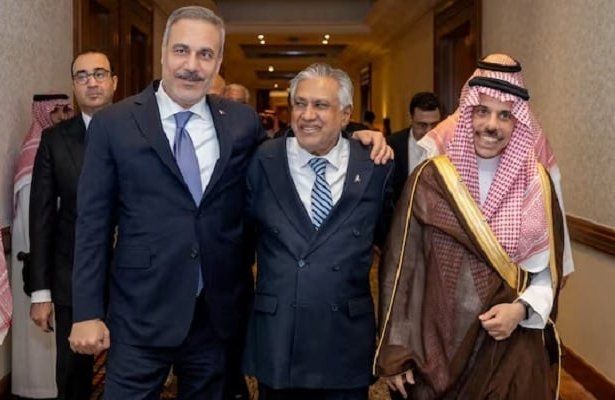
Turkiye has submitted the Makkah Joint Defence Alliance, signed with Pakistan and Saudi Arabia in August 2026, to its parliament for ratification. The move marks a step towards formalising trilateral military cooperation and establishing a framework for responding to external security threats.
Under the agreement, an armed attack on any one of the three countries will be treated as an attack on all three. The signatories have committed to providing assistance against external aggression and protecting one another’s territorial integrity, sovereignty and internationally recognised borders. The nature and extent of assistance will be determined after assessing the needs of the country under attack and the military capabilities and resources available to the other members.
The pact follows the principle of collective defence associated with Article 5 of NATO’s founding treaty. It also refers to Article 51 of the United Nations Charter, which recognises the right of individual and collective self-defence against armed attacks. The agreement is described as defensive in nature, with cooperation intended to address security threats rather than provide a basis for offensive military action.
Pact establishes a 10-year minimum commitment
The agreement stipulates that none of the three countries can withdraw during the first 10 years after the pact enters into force. After that period, a member seeking to leave must provide at least three months’ written notice to the other signatories through diplomatic channels. The arrangement will remain in force indefinitely unless a member withdraws according to its provisions.
Withdrawal will not cancel previously agreed activities and projects. Obligations concerning classified information will also remain binding. The pact requires the countries to protect confidential documents and information exchanged under the alliance and prohibits sharing such material with outside governments, companies or individuals. Amendments will require consultations and unanimous approval from the designated core parties.
Turkiye’s role expected to focus on defence technology
Turkiye’s contribution is expected to include military equipment, intelligence sharing, weapons systems, defence production, logistics and joint training. Cooperation will also cover counterterrorism, research and the development of advanced technologies. Turkish officials have indicated that the agreement does not automatically authorise overseas troop deployments.
Turkish Foreign Minister Hakan Fidan has said Turkiye would not send troops to another state to launch attacks from its territory. The country’s constitution requires separate parliamentary authorisation for overseas troop deployments, regardless of international agreements. Turkish officials have also stated that no other form of military deployment has taken place under the alliance so far.
Parliamentary review and regional security
Turkish parliamentary sources said Parliament Speaker Numan Kurtulmus would refer the agreement to the Foreign Affairs Committee after returning from Kyrgyzstan. The committee could begin discussing the pact as early as Friday, according to those sources. Parliamentary ratification is required to complete Turkiye’s formal approval process.
Turkish President Recep Tayyip Erdogan’s communications director, Burhanettin Duran, described the move as an important milestone in strategic cooperation among the three countries. He said the partnership aimed to strengthen collective deterrence, improve defence capabilities and support regional security and stability.
The alliance comes amid heightened regional security concerns, including attacks by Yemen’s Houthi movement on Saudi Arabia. Representatives of Pakistan, Saudi Arabia and Turkiye reportedly agreed at an emergency meeting in Riyadh to facilitate the rapid deployment of military forces and capabilities in Saudi Arabia. Turkiye has condemned the Houthi attacks and expressed willingness to help address Saudi Arabia’s military technology requirements, while also agreeing to join a Saudi-led coalition focused on safe navigation in the Red Sea.