



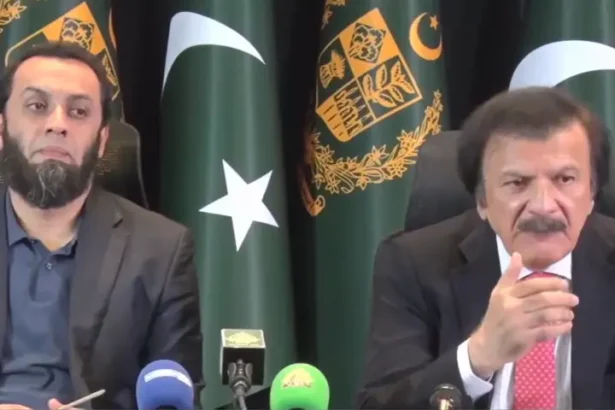
The federal government has unveiled a new five-year automobile policy aimed at gradually reducing vehicle prices, promoting electric vehicles (EVs), strengthening local manufacturing and increasing Pakistan’s automotive exports. Information Minister Attaullah Tarar and Adviser to the Prime Minister on Industries and Production Haroon Akhtar Khan announced the proposed framework at a press conference in Islamabad. The policy will now move through the cabinet approval process.
Haroon Akhtar said the policy was developed after extensive consultations and focuses on six priorities: affordable vehicles, export growth, localisation, vehicle safety, electric mobility and transparency. He explained that import duties on completely built-up vehicles, assembly plants and automotive components would be reduced annually over the next five years. The government expects these changes to lower manufacturing costs and gradually make locally produced vehicles more affordable, particularly for middle-income and lower-middle-income households. Luxury vehicles, however, will not receive the same price relief.
The policy also sets a target of achieving $6 billion in cumulative automotive exports over five years. According to Akhtar, Pakistan’s automobile exports remain limited, with overseas shipments mainly consisting of vehicle components rather than fully manufactured vehicles. To encourage manufacturers to expand exports, the government plans to introduce a reward-and-penalty system. Companies meeting their export targets will receive a five per cent Duty Drawback on Local Taxes and Levies (DLTL), along with an additional 10 per cent incentive for annual growth in incremental exports. Manufacturers failing to meet export and domestic production targets could face penalties and lose eligibility for export rebates.
Another major objective is to increase localisation and reduce dependence on imported vehicles and completely knocked-down kits. The government intends to make localisation targets compulsory for manufacturers to expand domestic production and create employment opportunities. Akhtar said Pakistan currently has 16 car and SUV manufacturers and around 100 two-wheeler manufacturers.
The proposed framework also addresses additional payments, commonly known as on-money, during vehicle bookings. Under the proposed rules, manufacturers will not be allowed to demand advance payments exceeding 20 per cent of a vehicle’s price at the time of booking. The measure is intended to improve transparency in the vehicle purchasing process and address concerns over additional charges.
Vehicle safety is another key part of the policy. The government plans to introduce 45 additional safety standards aligned with the United Nations’ WP.29 regulations. These requirements will apply to locally manufactured and imported vehicles, with particular attention to issues such as defective brakes, tyre failures and other safety-related concerns.
To promote electric mobility, the government aims to increase EVs’ share to 30 per cent of all new vehicle sales by 2030. The proposed tax structure includes a one per cent sales tax on fully electric vehicles, six per cent on range-extended electric vehicles and nine per cent on hybrid electric vehicles. These concessions will remain subject to approval from the International Monetary Fund (IMF).
The proposed policy also provides tax exemptions for electric vehicles priced up to $50,000. These vehicles would be exempt from capital value tax, withholding tax and federal excise duty, while vehicles above the threshold would be treated as luxury items and taxed under the applicable rules.
In addition, the government plans to expand the State Bank of Pakistan’s vehicle financing facility for electric cars. The existing financing limit of Rs3 million is proposed to increase to Rs10 million for EV purchases. The measures form part of the government’s broader plan to encourage electric vehicle adoption and improve access to financing.
The proposed reforms cover vehicle affordability, manufacturing, exports, booking practices, safety standards and electric mobility. However, the policy must complete the cabinet approval process, while certain EV tax concessions remain subject to IMF approval. Its implementation over the next five years will determine how these measures affect vehicle prices, local production and the country’s automotive industry.