



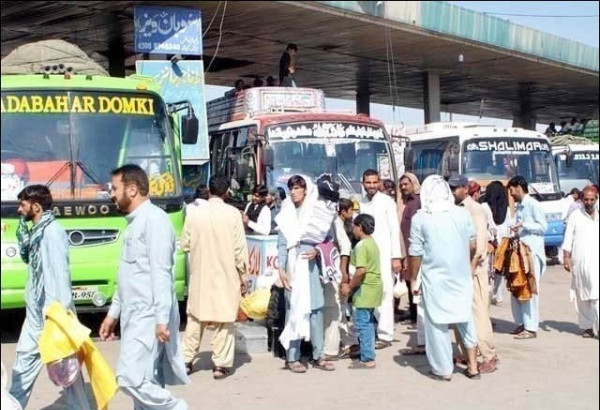
Public transport fares across several intercity routes in Pakistan have increased significantly following the recent rise in petroleum product prices. The increase has placed additional financial pressure on commuters who are already struggling with rising inflation and higher living costs.
According to transport operators, ticket prices were revised shortly after goods transporters increased freight charges due to higher fuel and operational expenses. The new fare adjustments range between Rs300 and Rs600 depending on the distance and route.
Transport companies operating from major bus terminals in Lahore confirmed that the fare for passengers traveling from Lahore to Islamabad has increased from Rs2,600 to Rs3,000. Similarly, travelers going from Lahore to Peshawar are now paying Rs3,500 compared to the previous fare of Rs2,890.
Several other intercity routes have also seen fare revisions. The ticket price from Lahore to Sargodha has been increased from Rs1,300 to Rs1,550, while passengers traveling between Lahore and Faisalabad are now paying Rs1,350 instead of the earlier Rs1,200.
Long-distance travel has also become more expensive. The fare for the Lahore to Karachi route has increased from Rs8,000 to Rs8,600. Meanwhile, passengers traveling from Lahore to Hyderabad now have to pay Rs9,200 compared to the previous fare of Rs8,650. Likewise, the fare from Lahore to Rahim Yar Khan has increased from Rs4,000 to Rs4,250.
Tourist routes have also been affected by the rising fuel costs. The fare from Lahore to Murree has increased from Rs2,790 to Rs3,300, reflecting the broader impact of fuel price increases on Pakistan’s transport sector.
Transporters say the increase was unavoidable due to rising fuel prices and higher operational costs. However, passengers have expressed concern about the growing financial burden caused by inflation and continuous price hikes.
Experts believe that unless fuel prices stabilize, public transport fares may continue to increase in the coming months, further affecting daily commuters and travelers across the country.