




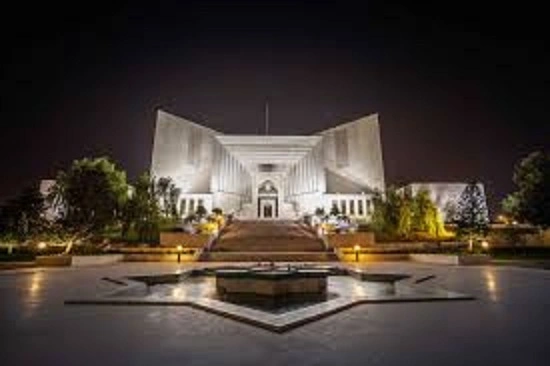
A significant constitutional development has emerged in Pakistan as the Supreme Court (SC) has ruled that it is not subordinate to the Federal Constitutional Court (FCC), redefining the judicial structure under the amended Constitution.
The judgment, authored by Chief Justice of Pakistan Yahya Afridi, clarifies that the constitutional framework introduced after the 27th Amendment establishes two co-equal apex courts rather than a hierarchical system. According to the ruling, both the Supreme Court and the FCC operate independently within their respective jurisdictions.
The court explained that Article 175F outlines separate domains for both courts, ensuring that each exercises authority over specific categories of cases. While Article 189(1) states that FCC decisions on legal questions are binding, the Supreme Court emphasized that this does not make it subordinate in terms of overall authority or case outcomes.
The ruling came during proceedings involving a writ petition, civil revision, and contempt application. The court decided that constitutional matters should be transferred to the FCC, while other cases would remain under the jurisdiction of the Supreme Court.
This decision has sparked a legal debate across Pakistan. Some legal experts argue that the 27th Amendment effectively made the FCC the highest authority in constitutional matters, while others support the Supreme Court’s interpretation of a balanced judicial system.
Earlier judgments by the FCC had asserted that its decisions are binding on all courts, including the Supreme Court, and that it holds ultimate authority in constitutional interpretation. However, the Supreme Court’s latest ruling challenges this position, stating that both courts are coordinate institutions with clearly defined roles.
Legal analysts believe this evolving situation could shape the future of constitutional law in Pakistan, as questions remain about the balance of power between the two apex courts.
The development highlights an ongoing institutional debate that may ultimately require further judicial clarification or constitutional interpretation to fully resolve.