




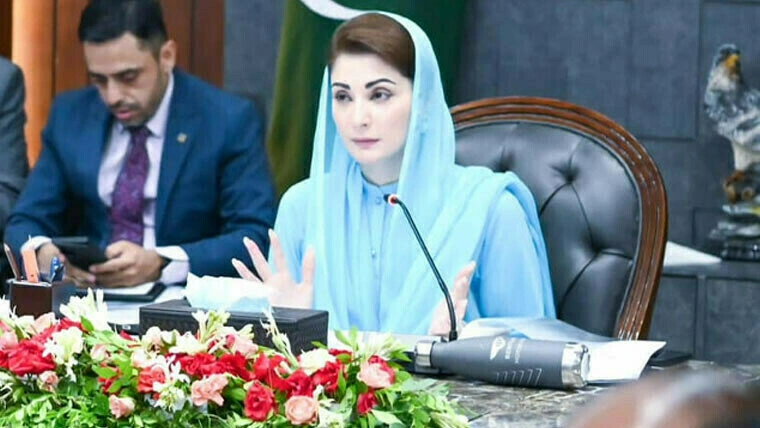
Punjab Chief Minister Maryam Nawaz has announced a comprehensive prison reform programme aimed at transforming jails across the province into modern rehabilitation centres focused on education, vocational training, mental health, and inmate welfare. Chairing a high-level meeting in Lahore, the chief minister directed authorities to improve prison infrastructure, reduce overcrowding, and ensure the protection of prisoners’ dignity and basic human rights.
As part of the reforms, the Punjab government approved Rs1.3 billion for the early completion of the Nankana Sahib Jail, while setting September as the completion deadline for both the Nankana Sahib and Samundri prison projects. Authorities also informed the meeting that work on new prisons in Chiniot and Murree is progressing, alongside the construction of 27 additional barracks to ease overcrowding.
The reform package places special emphasis on women prisoners and children living inside prisons. The chief minister ordered better accommodation, quality beds, educational facilities, vocational training, play areas, and nutritional support for children residing with incarcerated mothers. Modern women’s prisons are also being developed in Lahore, Faisalabad, and Rawalpindi to improve living conditions for female inmates.
To modernize prison management, the Punjab government approved a Remission Management System, expanded biometric verification, upgraded prison security through X-ray scanners and panic alert systems, and introduced modern air-conditioned prison transport vehicles equipped with surveillance cameras and washrooms.
Educational and rehabilitation initiatives have also been expanded significantly. Thousands of inmates are currently enrolled in literacy and academic programmes, while prison industries operating in multiple jails provide practical training in furniture manufacturing, garments, LED lights, mobile phone repair, welding, computer courses, agriculture, and other technical skills that can help prisoners reintegrate into society after release.
Officials also highlighted improvements in healthcare, psychological counseling, food quality, religious education, sports facilities, and communication services for prisoners. Since 2024, thousands of inmates have been transferred closer to their home districts, while regular audio and video call facilities have strengthened family connections.
Punjab’s prison population currently exceeds official capacity, with undertrial prisoners making up nearly three-quarters of all inmates. The government plans to further expand prison capacity by 2027 while continuing reforms designed to improve rehabilitation, strengthen correctional services, and reduce repeat offending.