



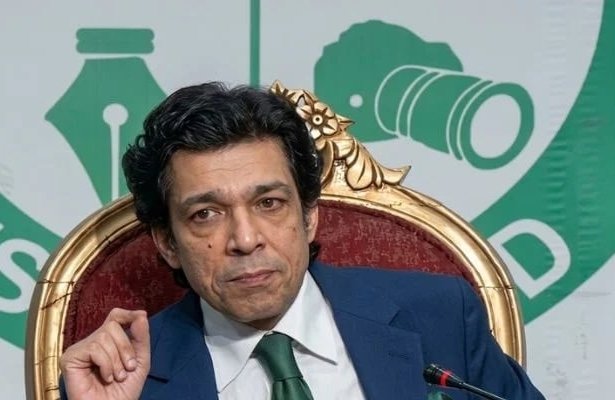
Senator Faisal Vawda has said that the emergency and governor’s rule imposed in Khyber Pakhtunkhwa (KP) are unlikely to end within the next 90 or even 180 days. Speaking on a television programme, Vawda commented on the province’s new administrative arrangement and the wider political situation in Pakistan.
Vawda said no political party currently had sufficient political capital to significantly influence the situation. He suggested that political leaders and parties would need to concentrate on their responsibilities and work. Referring to further developments in the country, the senator said the current situation represented only the first stage of a broader political process.
During the programme, Vawda praised Prime Minister Shehbaz Sharif’s performance but ruled out the possibility of further governor’s rule, martial law or the introduction of a presidential system. He also called on the government to address the concerns of Jamiat Ulema-e-Islam-Fazl (JUI-F) chief Maulana Fazlur Rehman, stressing that his reservations should be taken seriously.
The senator described Pakistan’s current political direction as a move towards what he called “positive democracy”. Discussing his election to the Senate, Vawda said the Pakistan Peoples Party (PPP) and Muttahida Qaumi Movement-Pakistan (MQM-P) had voted for him, while the Pakistan Muslim League-Nawaz (PML-N) had not. He also made a comparison between the political approaches of the founder of Pakistan Tehreek-e-Insaf (PTI) and the founder of the MQM.
The remarks come after President Asif Ali Zardari approved the imposition of an emergency and governor’s rule in Khyber Pakhtunkhwa on the advice of Prime Minister Shehbaz Sharif. The decision was taken under Articles 232 and 234 of the Constitution following recommendations from the federal cabinet and reports concerning the province’s law and order situation.
Under the new arrangement, KP Governor Faisal Karim Kundi has assumed the functions of the provincial government on behalf of the federation, assisted by an 11-member advisory council. Parliament is exercising the legislative powers of the provincial assembly. The arrangement marks a significant change in the province’s administrative and legislative structure.
Vawda’s comments reflect his assessment that the emergency and governor’s rule could remain in place beyond the next six months. However, the duration of the arrangement will depend on subsequent constitutional, legal and political developments. His remarks represent his stated view rather than a confirmed timeline for when the measures may end.