






The German newspaper DW has raised several concerns and critical observations regarding Pakistan’s political, economic, and security situation. No country should be considered beyond criticism, and accountability is an important element of democracy. However, criticism must also be accompanied by balance, context, and a comparative perspective. If the challenges of a country are discussed, its sacrifices, achievements, and ground realities should also be presented with equal fairness.
Pakistan is often portrayed as a country facing political instability, economic difficulties, and security challenges. However, an important question remains: is there any country in today’s world that is completely free from such challenges?
Inflation, unemployment, political disagreements, social issues, and governance challenges are not unique to Pakistan. They are global realities affecting nations across the world.
Germany, one of the world’s leading economies, is facing economic pressures, including rising energy costs, challenges within its industrial sector, concerns regarding employment, and economic uncertainty. Similarly, countries such as the United Kingdom, France, and the United States continue to experience inflation, political divisions, public protests, and social challenges.
Therefore, highlighting the problems of one country while ignoring similar difficulties faced by others cannot be considered a complete and balanced analysis. Every nation must be understood within the context of its own history, geography, political environment, and security needs.
Freedom of Expression: Is Pakistan Being Judged by a Different Standard?
Pakistan is frequently criticised regarding freedom of expression, democratic values, and human rights. Such discussions are necessary in every democratic society. However, an important question must also be asked: is Pakistan being judged by the same standards applied to other countries?
In Pakistan, political leaders, opposition representatives, journalists, lawyers, and members of civil society openly express their views on governments, state institutions, and national affairs. Political debates, speeches, and different opinions are widely discussed through media platforms.
On various occasions, statements from detained political figures have also been reported prominently in the media. This raises an important comparative question: do individuals in custody in countries such as the United States, the United Kingdom, France, or Germany receive exactly the same level of media access and opportunity to express their political views?
In many democratic countries, detention laws are strictly implemented, and access to media is regulated according to legal procedures. Therefore, discussions about Pakistan’s freedom of expression should also consider international comparisons and broader realities.
The right to peaceful protest is a fundamental democratic right, and Pakistan’s Constitution recognises this principle. However, every right comes with responsibilities.
Pakistan has witnessed political protests that have continued for weeks and, in some cases, months. On certain occasions, major roads were blocked, public life was disrupted, and damage to public and private property was reported. Despite these challenges, governments have often chosen dialogue, patience, and political engagement instead of excessive use of force.
In every democracy around the world, the right to protest exists within the framework of law. No democratic society allows violence, vandalism, threats, or the disruption of public order under the name of political expression.
Pakistan should neither seek exceptional treatment nor be judged by different standards.
The Role of Pakistan’s Armed Forces and National Defence
Some analysts describe Pakistan’s political system as a “hybrid system.” However, another important perspective also deserves consideration.
Pakistan’s armed forces have made significant sacrifices for national defence, security, and the fight against terrorism. Thousands of soldiers and officers have lost their lives while protecting the country’s sovereignty, stability, and security.
Pakistan’s geographical position places it in a complex security environment. Located at the crossroads of South Asia, Central Asia, and the Middle East, Pakistan faces unique regional and international challenges.
There is also criticism that Pakistan’s armed forces are involved in business and commercial activities. However, this matter can also be viewed from another perspective. Pakistan’s defence requirements are extensive, and investments in various institutions and projects are aimed at supporting defence needs, welfare activities, and reducing unnecessary pressure on national resources.
Many countries around the world allow their military institutions to participate in research, technology, industry, development projects, and humanitarian activities. The United States and other developed nations have similar examples where defence-related organisations contribute to national development and innovation.
Therefore, such policies should be assessed on the basis of national interest, transparency, effectiveness, and contribution to society rather than through criticism alone.
For more than four decades, Pakistan has paid a heavy price due to regional conflicts and global security challenges. The consequences of the war in Afghanistan, participation in the international fight against terrorism, hosting millions of refugees, and the loss of thousands of precious lives have deeply affected the country.
Pakistan has made enormous sacrifices in combating terrorism and has achieved significant successes in restoring security and stability. Despite these challenges, Pakistan continues to contribute towards regional peace and international cooperation.
The Kashmir dispute remains one of the longest unresolved conflicts in South Asia. Pakistan supports the right of the Kashmiri people to self-determination in accordance with relevant United Nations resolutions and continues to advocate a peaceful and diplomatic solution.
Pakistan’s stated position has consistently been based on dialogue, diplomacy, and peaceful engagement. Sustainable peace in South Asia can only be achieved through mutual respect, understanding, and peaceful resolution of disputes.
The Situation in Azad Kashmir and the Government’s Approach
The situation in Azad Kashmir demonstrates the importance of dialogue and political engagement during times of tension.
A responsible state must ensure law and order, protect the lives and property of citizens, and seek constitutional and democratic solutions to public concerns.
The right to protest is a democratic right, but it cannot justify violence, firing, destruction of property, threats against state institutions, or taking the law into one’s own hands.
Pakistan has always maintained that peace and stability are essential for regional development. Its foreign and security policies focus on promoting cooperation, stability, and constructive engagement with the international community.
Regarding the leadership of Field Marshal Asim Munir, his supporters believe that he has contributed towards strengthening Pakistan’s international image and highlighting the country’s commitment to peace and cooperation.
Pakistan has repeatedly expressed that disputes should be resolved through dialogue, diplomacy, friendship, and mutual respect rather than confrontation.
Pakistan possesses the capability to defend itself against terrorism and hostile elements; however, its preferred approach remains peace, negotiations, and peaceful coexistence.
Unfortunately, some elements attempt to create internal divisions and instability. Differences of opinion are a natural part of democracy, but actions that harm national unity, security, and public interest weaken societies.
Pakistan is a resilient, talented, nuclear-armed, and proud nation whose people have demonstrated courage, sacrifice, and determination throughout history.
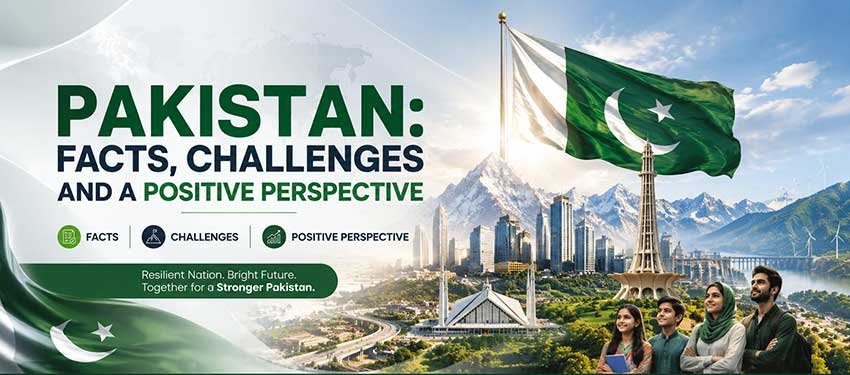
Pakistan is not only a country of challenges; it is also a country of achievements, opportunities, talent, and hope for the future.
Journalism’s true purpose is not merely to identify shortcomings but to present the complete truth with balance, integrity, and impartiality. If Pakistan’s challenges are discussed, its sacrifices, achievements, and ground realities must also be acknowledged.Pakistan seeks peace, but it is also fully prepared to protect its sovereignty, security, and national interests. The strength of a nation is not measured only by its power but also by its wisdom, tolerance, responsibility, and commitment to a better future.