




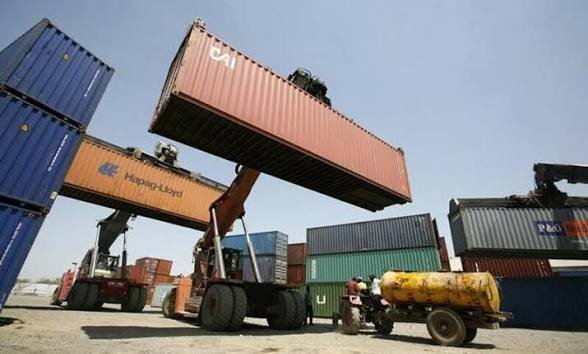
Pakistan’s import bill increased by 14.3 per cent to $17.8 billion during July to September of fiscal year 2027, outpacing the 7.7 per cent growth in goods exports, which reached $8.5 billion. The widening trade gap contributed to a current account deficit of $874 million, compared with $755 million during the same period last year, according to the Finance Division’s October Economic Update and Outlook.
The report highlighted continued inflationary pressure despite a decline in the monthly rate. Consumer inflation stood at 10.3 per cent in September, compared with 11.1 per cent in August and 5.8 per cent in September last year. Transport prices increased by 27.4 per cent year-on-year, while housing, water, electricity, gas and fuel costs rose by 12.4 per cent.
The State Bank of Pakistan raised its policy rate by 0.5 percentage points to 12 per cent, effective October 27, 2026. The decision came amid concerns about inflation, rising international oil prices and uncertainty linked to the conflict in the Middle East. Brent crude averaged $116.8 per barrel in September, marking a 28.4 per cent increase from August. The Finance Division expects inflation to remain between 9.5 and 10.5 per cent in October.
Pakistan also recorded higher financial inflows during the first quarter of fiscal year 2027. Remittances from overseas Pakistanis increased by 14 per cent to $10.9 billion, while foreign direct investment rose by nearly 20 per cent to approximately $720 million. The country also received around $2.9 billion in net portfolio investment inflows following its $3 billion Eurobond issuance in September.
These inflows helped improve the overall balance of payments, which recorded a surplus of $3.1 billion, compared with a deficit of $274 million in the same quarter last year. By October 16, the State Bank’s liquid reserves had reached $21.5 billion, while total liquid foreign reserves stood at $26.8 billion.
However, the report showed pressure on government finances. Pakistan recorded a fiscal surplus of Rs1.2 trillion, equivalent to 0.8 per cent of GDP, during July and August, compared with Rs2.12 trillion or 1.7 per cent of GDP in the corresponding period last year. The primary surplus also declined from Rs2.94 trillion to Rs2.31 trillion, partly due to a 36.6 per cent increase in interest payments. Subsidies were reduced by 90 per cent.
The Federal Board of Revenue collected Rs3.09 trillion in taxes during July to September, registering a 7 per cent increase and exceeding its target by Rs33.2 billion. Direct tax collection grew by 5.5 per cent, while indirect taxes increased by 8.3 per cent.
Economic activity remained mixed across industrial sectors. Large-scale manufacturing grew by 1.9 per cent during July and August, compared with 4.8 per cent in the same period last year. August output also declined by 5 per cent compared with July. However, automobile production recorded growth, with truck and bus output increasing by 54.2 per cent, car production by 31.8 per cent and two- and three-wheeler production by 28.1 per cent during the first quarter.
Agricultural production also showed varied results. Maize output was estimated at 9.98 million tonnes, while sugarcane production reached 97.3 million tonnes. Rice production was estimated at 10.2 million tonnes, whereas cotton output declined by 4.8 per cent to 6.71 million bales. Agricultural credit increased by 32.7 per cent to Rs540.5 billion during July and August.
The government expects agriculture, manufacturing, construction and exports to contribute to economic growth during fiscal year 2027. Revised national accounts placed Pakistan’s economic growth at 3.65 per cent for fiscal year 2026, with agriculture growing by 3.50 per cent, industry by 3.34 per cent and services by 3.81 per cent. Despite improved reserves and financial inflows, the rising import bill, inflation and fiscal pressures remain important challenges for the economy.