




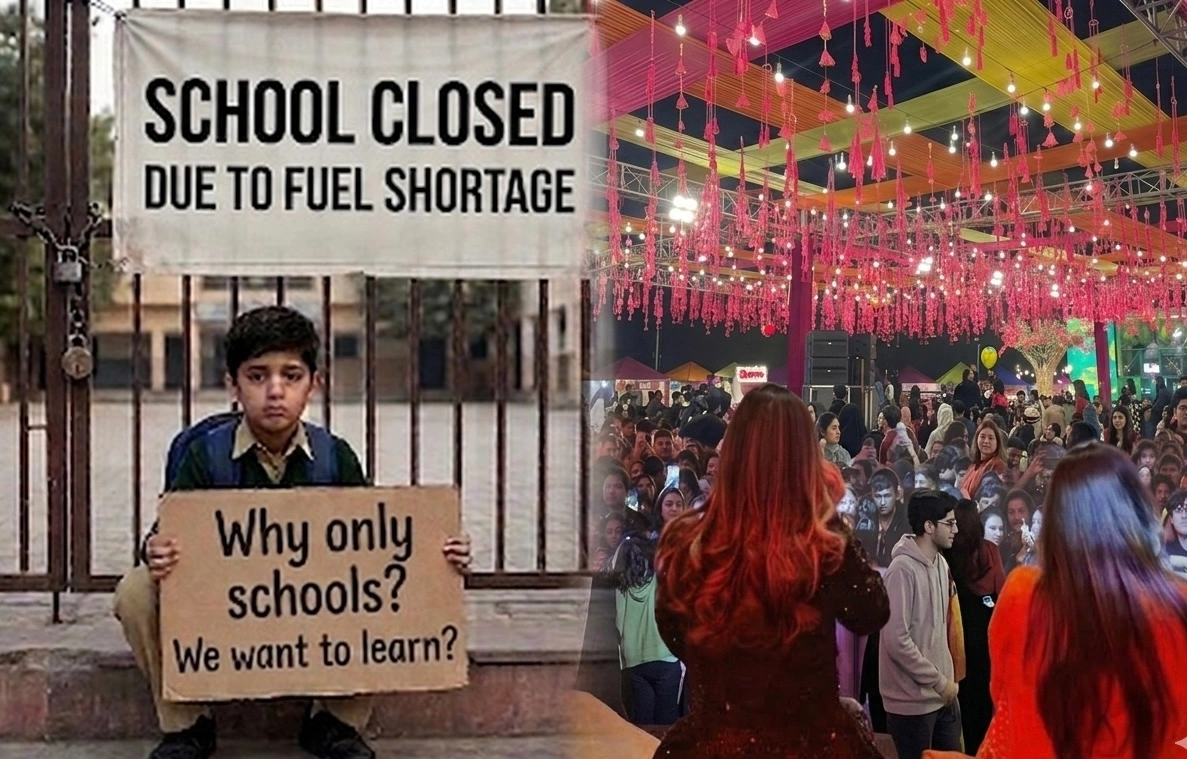
The Government of Pakistan has announced the closure of schools as part of efforts to conserve fuel amid rising energy costs. The decision, announced on the evening of March 9, has resulted in millions of students remaining out of classrooms starting from the morning of March 10.
Officials stated that the move is intended to reduce fuel consumption by limiting transportation associated with school activities. Daily commutes by parents, teachers, school vans, and buses contribute significantly to urban fuel usage, and authorities believe that temporarily closing schools will help reduce this demand.
However, the decision has sparked widespread debate because major public events, festivals, and sports activities are continuing across several cities. In Lahore, preparations are ongoing for popular gatherings such as lifestyle markets, seasonal festivals along the canal, and the excitement surrounding the Pakistan Super League.
Large-scale events typically attract thousands of visitors and involve significant transportation activity. Vendors transport goods and equipment, visitors travel to venues, and service workers commute to work. As a result, many observers have questioned the effectiveness of closing schools while other large gatherings continue as usual.
The announcement quickly triggered reactions on social media. Parents, teachers, and analysts questioned the logic behind limiting educational activities while allowing large leisure events to proceed.
Many social media users highlighted that markets, festivals, and sporting events generate considerable traffic and fuel consumption. Some critics suggested that if fuel conservation is the main goal, restrictions should apply more broadly across multiple sectors rather than focusing mainly on schools.
Others pointed out that commercial activities cannot always be halted because they support thousands of livelihoods. Markets, shops, and small businesses depend on daily operations, and strict limitations could affect workers who rely on daily income.
Despite this, critics argue that many events currently taking place are centered around entertainment and leisure rather than essential economic activity. This contrast has led to frustration among parents who see schools closed while lifestyle events continue.
Some observers have proposed alternative measures to reduce fuel consumption without disrupting education. Suggestions include limiting large public gatherings, reducing operating hours for major markets, or introducing staggered schedules for commercial areas to reduce traffic during peak hours.
The latest closure has also revived a broader discussion about frequent disruptions to education in Pakistan. Schools have previously been closed during smog emergencies, security concerns, and energy shortages.
For many parents and educators, the decision highlights a recurring pattern where educational institutions are among the first to shut down during national challenges.
As major events and commercial activities continue across cities, the debate raises important questions about how conservation measures are implemented and whether the burden falls disproportionately on the education sector.