





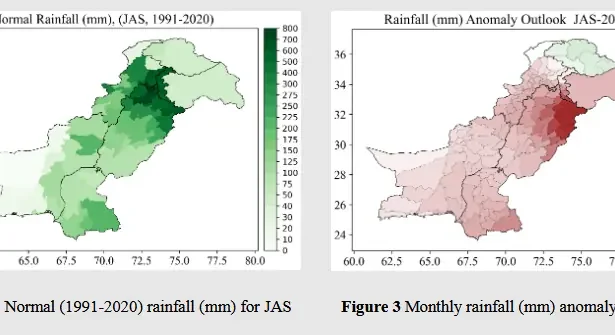
The Pakistan Meteorological Department (PMD) has issued a fresh three-month seasonal outlook, warning that most parts of Pakistan are expected to experience below-normal monsoon rainfall coupled with above-average temperatures from July through September 2026. The forecast raises concerns over potential water shortages, agricultural losses, health risks, and climate-related disasters during the peak monsoon season.
According to the PMD, the Indian Ocean Dipole (IOD) currently remains in a neutral phase but is expected to gradually transition into a positive phase as the season progresses. Meanwhile, rising sea surface temperatures across the central and eastern tropical Pacific Ocean indicate the possible emergence of El Niño conditions. Historically, El Niño has been associated with weaker monsoon activity and reduced rainfall in Pakistan.
The department noted that these warming trends are likely to persist throughout the July–September period and could intensify further. Although a positive IOD often supports enhanced rainfall in South Asia, its delayed development this year may limit its influence on Pakistan’s overall monsoon pattern.
Based on the latest climate models, most regions of Pakistan are expected to receive normal to below-normal rainfall. Northeastern Punjab is likely to witness the most significant rainfall deficits. The probabilistic forecast suggests that Punjab, Sindh, southern Khyber Pakhtunkhwa, and large parts of Balochistan have a higher probability of receiving less rainfall than usual.
However, northern areas including Gilgit-Baltistan, Azad Jammu and Kashmir, and upper Khyber Pakhtunkhwa may experience normal to slightly above-normal rainfall during the season.
The PMD has also warned that temperatures across the country are expected to remain consistently above average. The strongest temperature anomalies are anticipated in northeastern Punjab and eastern Gilgit-Baltistan. Southern Punjab, western Sindh, eastern Balochistan, and southern Khyber Pakhtunkhwa are also likely to endure prolonged heat stress conditions.
The changing weather patterns could trigger several hazards. In northern mountainous regions, rainfall combined with rising temperatures may increase the risk of flash floods, landslides, and glacial lake outburst floods (GLOFs). Accelerated glacier and snow melt may further elevate river flows downstream.
In contrast, reduced rainfall across the plains could lead to water shortages affecting major Kharif crops such as rice, cotton, sugarcane, and maize. Farmers may face increased irrigation requirements, potentially placing additional pressure on already strained water resources.
The department also highlighted public health concerns, including a greater risk of vector-borne diseases such as dengue fever. Strong winds, dust storms, and hailstorms could damage standing crops, orchards, and vegetables, prompting authorities to advise farmers to adopt preventive measures.
Additionally, the PMD recommended reinforcing billboards in urban areas and securing solar panel installations to minimize damage caused by severe weather conditions expected during the season.