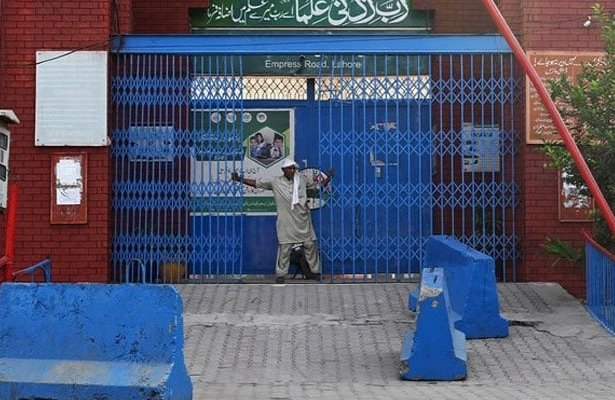





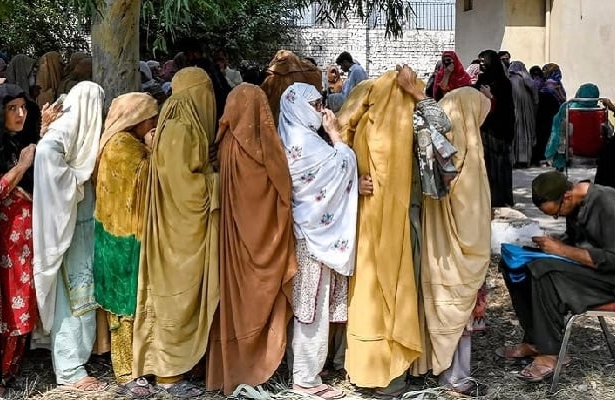
At least eight women lost their lives and more than 80 others were injured after a tragic roof collapse during an aid distribution event in Rahim Yar Khan.
The incident occurred during the disbursement of financial assistance under the Benazir Income Support Programme, one of Pakistan’s largest social protection initiatives aimed at supporting vulnerable families.
According to officials, the tragedy took place in Chak 123P, where a large number of women had gathered to receive payments ahead of Eid ul-Fitr.
Due to the increasing crowd, the area became severely overcrowded within a short period.
Reports suggest that because of limited space inside the distribution center, some women were directed onto the rooftop of a nearby structure.
Moments later, the roof collapsed under pressure, trapping dozens of people under the debris.
District Police Officer Irfan Samo confirmed the casualties and stated that emergency teams responded quickly to the incident.
Rescue teams and local authorities rushed to the scene and shifted the injured to Sheikh Zayed Hospital for medical treatment.
Hospital officials reported that many victims suffered serious injuries, including fractures, head trauma, and internal bleeding, with several patients still in critical condition.
Authorities have registered a case against multiple individuals, including a private retailer’s device agent involved in the aid distribution process.
Officials stated that negligence and poor crowd management are key factors being investigated.
The tragic incident has once again highlighted the risks associated with overcrowding at aid distribution centers, particularly during peak times such as religious occasions.
Experts and officials have stressed the urgent need for improved planning, better infrastructure, and strict safety measures to prevent such incidents in the future.
The government is expected to review safety protocols to ensure that aid distribution programs prioritize the protection and well-being of beneficiaries.