





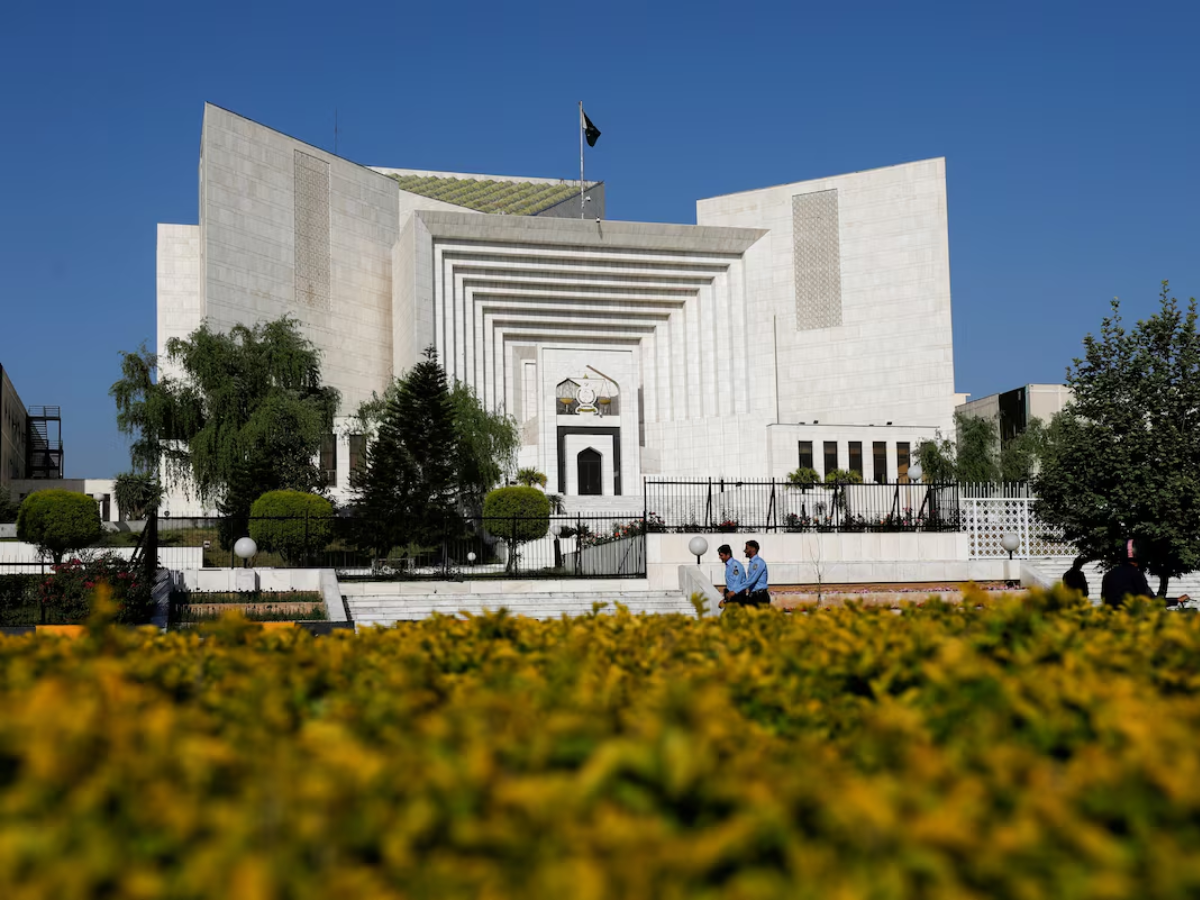
The Supreme Court of Pakistan has issued an important ruling regarding investigations in narcotics cases, stating that a complainant should not ordinarily serve as the investigation officer (IO) in the same case.
The judgement was authored by Justice Jamal Khan Mandokhail in a drug-related case where the court acquitted a petitioner previously sentenced to life imprisonment under Section 9(c) of the Control of Narcotic Substances Act, 1997.
The petitioner had been arrested in 2019 and convicted by a trial court, while the Sindh High Court later upheld the conviction. However, a three-member bench of the Supreme Court reviewed the matter and set aside the conviction after identifying serious concerns in the investigation process.
In its detailed judgement, the Supreme Court observed that when a complainant also acts as the investigation officer, it creates a strong possibility of bias and weakens the credibility of the prosecution’s case. The court stressed that investigations must be carried out by independent and impartial officers who can objectively assess all evidence.
Justice Mandokhail noted that the primary purpose of an investigation is to discover the truth in a fair and transparent manner. The judgement highlighted that a complainant serving as IO may focus only on proving allegations instead of examining facts both in favor of and against the accused.
The court further stated that although such appointments may not always be technically illegal, authorities must provide clear and justified reasons if they assign a complainant as investigation officer in any criminal matter, especially in narcotics cases involving severe punishments.
The bench also pointed out flaws in the handling of evidence, forensic procedures, and custody processes in the case under review, observing that the investigation failed to meet due process and fair trial standards.
Reaffirming a key principle of criminal law, the Supreme Court stated that even the slightest doubt in the prosecution’s case must benefit the accused. The judgement concluded that both lower courts had misread the evidence and failed to properly apply the principle of benefit of doubt.
The ruling is being viewed as an important step toward strengthening transparency, fairness, and impartiality in criminal investigations across Pakistan.