




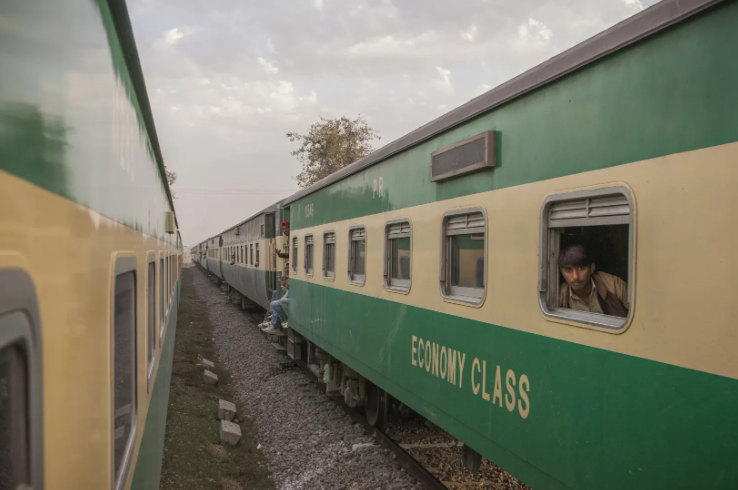
A rising number of train accidents across Pakistan has sparked serious concerns about railway safety, maintenance, and operational efficiency. Since January 1, more than 20 incidents involving passenger and freight trains have been reported, resulting in at least three deaths, hundreds of injuries, and significant disruption to rail services.
The accidents have occurred across major routes from Khyber Pakhtunkhwa to Sindh, affecting thousands of passengers and causing delays lasting several hours. These incidents include derailments, collisions with stationary trains, and technical failures, highlighting critical weaknesses in railway infrastructure.
Among the recent incidents, the Tezgam Express derailed near Lodhran, injuring passengers, while the Shalimar Express collided with a stationary freight train near Rohri, leading to the death of a railway employee. Other alarming cases include the Karakoram Express splitting into two due to coupling failure and the Green Line narrowly avoiding disaster after a buffer malfunction near Wazirabad.
Railway operations have also been disrupted due to derailments near Paddidan and Shahdadpur, further impacting travel schedules and logistics. These repeated incidents have caused financial losses worth millions and raised questions about the condition of tracks, rolling stock, and safety protocols.
Critics argue that despite warnings and directives from authorities, including the Federal Minister for Railways, the frequency of accidents has not decreased. Experts stress the urgent need for improved maintenance systems, better monitoring, and stronger safety measures to prevent further tragedies.
The growing concerns reflect the need for immediate reforms in Pakistan’s railway sector to ensure passenger safety, restore public confidence, and modernize infrastructure.