



Political Tensions Rise in Gilgit-Baltistan Ahead of June 7 Assembly Elections
ISLAMABAD – Political tensions are intensifying in Gilgit-Baltistan as the region prepares for Legislative Assembly elections scheduled for June 7, 2026. The upcoming vote has become the focus of growing controversy, with the Pakistan Tehreek-e-Insaf (PTI) alleging pre-poll manipulation, selective restrictions, and administrative pressure on its candidates. Meanwhile, election authorities and federal government officials have strongly rejected the accusations and defended the integrity of the electoral process.
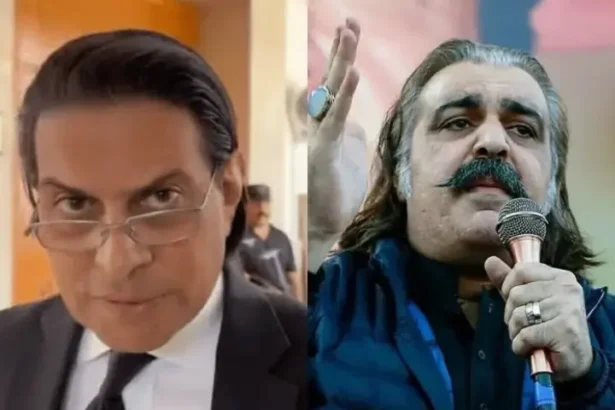
The dispute gained further attention after senior PTI leader and former National Assembly Speaker Asad Qaiser warned that his party would launch public protests if the elections were not conducted transparently. He also suggested that PTI’s decision not to stage large-scale protests following the February 2024 general elections was a mistake, signaling a tougher stance if concerns regarding the Gilgit-Baltistan elections remain unresolved.
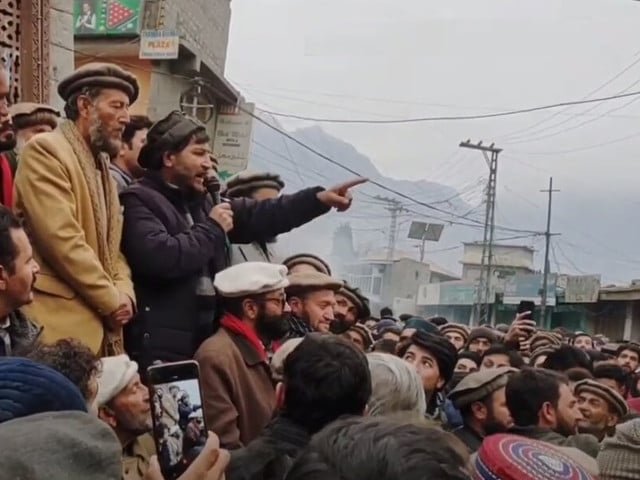
A significant controversy emerged on May 29 when PTI leaders, including Khyber Pakhtunkhwa President and Member of the National Assembly Junaid Akbar Khan, along with lawmakers Saleemur Rehman, Syed Mehboob Shah, and Dr. Amjad Ali Khan, were stopped at a police checkpoint in Ghizer district while returning from election campaign activities. Authorities stated that the group lacked the required no-objection certificate for public gatherings. PTI, however, described the action as deliberate political obstruction, while police maintained that no arrests were made.
The tensions increased further when Asad Qaiser alleged that Punjab Police prevented him from reaching Islamabad Airport, causing him to miss a scheduled flight to Skardu. He criticized what he described as restrictions on PTI leaders participating in election campaigns and questioned whether all political parties were being treated equally.
PTI leaders have pointed to the visible campaign activities of rival political parties as evidence of unequal treatment. They noted that leaders from other parties, including Pakistan Muslim League-Nawaz (PML-N) and Pakistan Peoples Party (PPP), have continued holding public gatherings and election activities across Gilgit-Baltistan without facing similar difficulties.
In its official response, PTI accused elements within the administration of attempting to influence the election outcome. The party claimed that some election officials had encouraged candidates to abandon PTI and contest elections on alternative political platforms. PTI also cited notices issued against individuals associated with party leaders as examples of what it called selective enforcement of election regulations.
Adding to the party’s challenges, PTI candidates are reportedly contesting as independent candidates after difficulties in obtaining the party’s official election symbol. Party representatives argue that this has created additional obstacles for candidates and voters ahead of polling day.
Authorities have announced extensive security arrangements for the elections. Punjab Police confirmed that more than 5,000 personnel will be deployed in Gilgit-Baltistan to assist with election security and maintain law and order. Government officials insist that the deployment is a standard security measure designed to ensure peaceful voting and protect electoral staff and voters.
Minister of State for Interior Talal Chaudhry dismissed PTI’s allegations and stated that the government has no interest in interfering with the democratic process. He argued that any restrictions imposed on political leaders were based on security considerations rather than political motives.
The Gilgit-Baltistan election administration has also denied accusations of favoritism. Chief Election Commissioner Raja Shahbaz Khan stated that the election code of conduct is being applied equally to all parties and candidates. According to the commission, notices have also been issued to candidates from PML-N and PPP for election-related violations, demonstrating that enforcement measures are not limited to a single political party.
Institutional tensions have also emerged during the campaign period. Khyber Pakhtunkhwa Chief Minister Sohail Afridi reportedly wrote to the Chief Justice of the Gilgit-Baltistan Supreme Appellate Court, expressing concerns over restrictions affecting political activity and requesting judicial intervention to ensure a level playing field.
The letter drew criticism from the Gilgit-Baltistan election administration, with Chief Election Commissioner Raja Shahbaz Khan stating that such communication had no legal standing and could be interpreted as interference in the electoral process. The exchange has added another layer of controversy to an already sensitive political environment.
The current political contest takes place against a backdrop of significant political changes in Gilgit-Baltistan. PTI emerged victorious in the 2020 elections and formed the regional government under Chief Minister Khalid Khurshid. However, following his disqualification by the Gilgit-Baltistan Chief Court in July 2023, a coalition consisting of PTI dissidents, PPP, and PML-N members assumed power and later elected Haji Gulbar Khan as Chief Minister.
PTI is now seeking to regain its political position in the region while operating under challenging electoral conditions. Party leaders maintain that the election environment must remain fair and transparent to ensure public confidence in the democratic process.
The Legislative Assembly completed its constitutional term in November 2025. Elections were originally planned for January 24 but were postponed due to severe winter weather conditions. June 7 was later selected as the most practical date before the beginning of Muharram, avoiding further delays that could have pushed elections into late summer.
As election day approaches, political tensions continue to rise. With both government officials and opposition leaders exchanging accusations and defending their positions, the June 7 elections are expected to play a significant role in shaping the future political landscape of Gilgit-Baltistan.