



Karachi witnessed renewed calls for justice as families of the victims of the devastating Baldia Town factory fire, along with labour rights organisations, demanded accountability following the Supreme Court’s decision to acquit two men previously convicted in the case.
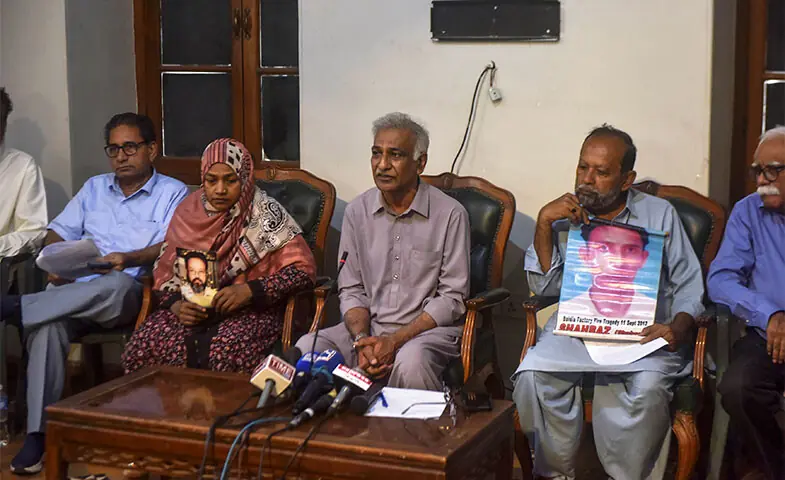
During a press conference at the Karachi Press Club, grieving families questioned who should now be held responsible for the deaths of more than 260 workers who lost their lives in one of Pakistan’s deadliest industrial disasters.
The Supreme Court’s recent ruling overturned the convictions of Abdul Rehman Bhola and Zubair alias Chariya, citing insufficient evidence. According to the judgment, only one witness among approximately 400 had testified to seeing one of the accused carrying a chemical bag, while no eyewitness directly observed anyone setting the fire.
Labour representatives argued that the acquittal reinforced their longstanding position that negligence by factory owners and failures of state institutions were the primary causes of the tragedy. They stressed that critical questions regarding workplace safety standards, emergency exits, inspection procedures, and regulatory oversight remained unanswered.
National Trade Union Federation General Secretary Nasir Mansoor stated that framing the case around terrorism and extortion shifted attention away from institutions responsible for enforcing labour laws and safety regulations. He maintained that this narrative prevented meaningful accountability and hindered reforms that could protect workers in the future.
Speakers highlighted the roles of the Labour Department, Fire Brigade, Employees’ Old-Age Benefits Institution (EOBI), Social Security institutions, and other regulatory bodies, calling for a fresh and transparent investigation into their conduct before and after the incident.
Husna Khatoon, chairperson of the Ali Enterprises Factory Fire Affectees Association and widow of one of the victims, recalled that workers were trapped inside the factory because exits and windows had allegedly been locked to prevent theft.
“It was not an accident. It was murder,” she said, demanding justice for the hundreds of workers who never returned home.
Labour activists also noted that compensation for victims’ families was achieved through sustained efforts by unions, legal advocates, and international organisations rather than direct support from factory owners.
The Baldia factory fire remains a painful reminder of the urgent need for stronger workplace safety standards, effective inspections, and accountability mechanisms to prevent similar tragedies in Pakistan’s industrial sector.