



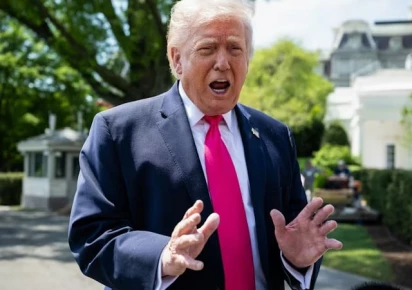
Former US President Donald Trump has sparked fresh geopolitical tensions by suggesting that the United States could take control of Cuba “almost immediately,” while also announcing a significant expansion of sanctions against the island nation.
Speaking at an event in Florida, Trump hinted at possible military pressure, suggesting that a major US naval asset such as the USS Abraham Lincoln could be deployed near Cuban waters as a show of force.
Alongside these remarks, the White House introduced a broader sanctions package targeting Cuban officials, companies, and organisations allegedly linked to security operations, corruption, and human rights concerns. The measures also extend to foreign businesses operating in key sectors such as energy, defence, mining, finance, and security within Cuba.
According to US officials, the expanded sanctions include the possibility of secondary penalties for international entities conducting transactions with blacklisted organisations. This development has raised concerns among global businesses about increased financial and legal risks when dealing with Cuban markets.
Cuban President Miguel Díaz-Canel strongly condemned the move, describing it as coercive and accusing Washington of intensifying long-standing economic pressure on the country. Similarly, Foreign Minister Bruno Rodríguez Parrilla labelled the sanctions as “collective punishment” and reiterated that Cuba would resist external pressure.
Experts have described the latest actions as one of the most aggressive US policy moves toward Cuba in recent years. The escalation highlights growing strain in US-Cuba relations and signals potential economic and diplomatic consequences not only for Cuba but also for international stakeholders.
The situation underscores broader geopolitical tensions as Washington continues to use economic and strategic tools to influence global affairs, raising concerns about stability in the region.