

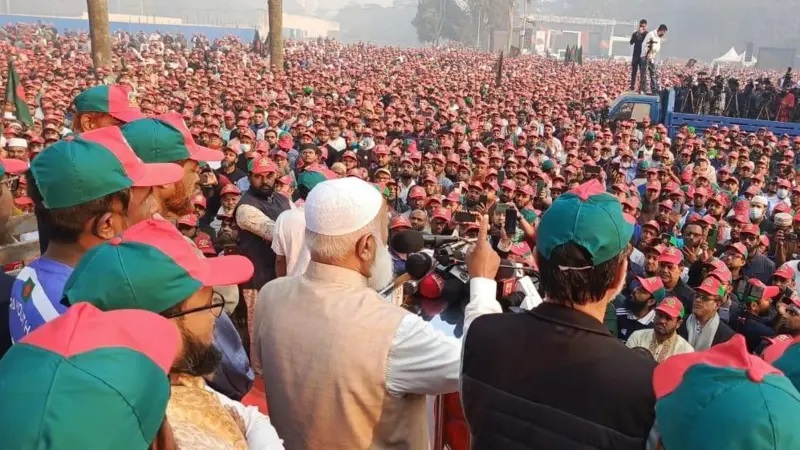
Dhaka: As Bangladesh prepares for its February 12, 2026 parliamentary election, the country’s political landscape is witnessing a major realignment. The National Citizen Party (NCP) — a party formed by student leaders and youth activists following the July 2024 movement — is now moving forward with an electoral understanding with Jamaat-e-Islami, one of the country’s longstanding Islamist political parties.
A New Generation Party Takes Shape
The NCP emerged from mass movements led by students and civil society demanding political change and reforms. Its core message focused on representing the voice of the younger generation, challenging entrenched political elites, and advocating for a new political framework.
Party leaders have described the alliance move not as a compromise but as a pragmatic strategy to broaden their reach and strengthen a collective chance to influence governance amid a crowded political field.
Political Calculations Behind the Alliance
The electoral pact includes seat sharing and cooperation between the NCP and Jamaat-e-Islami for key constituencies. Although Jamaat was previously barred from participating in elections for over a decade, its registration was reinstated, allowing it to return formally to the political arena. This reopening has motivated various parties to reassess alliances ahead of the national polls.
Analysts in Dhaka note that in the fragmented political landscape, smaller and newer parties often face the difficult task of balancing ideals with the practical realities of reaching voters across urban and rural constituencies.
Internal Debate and Democratic Expression
The alliance has triggered wide debate within the NCP itself. At least 30 central committee members have expressed formal objections to the pact, arguing it contradicts the party’s original ideals and democratic principles. A number of senior leaders, including well-known figures involved in the 2024 movement, have resigned or stepped back from party roles in protest.
Several leaders — particularly from within the party’s women’s wing — publicly voiced concern that the new strategy diverged from the spirit of the youth-led revolt that gave birth to the NCP. Some have chosen to contest independently, while others have withdrawn from electoral competition altogether.
This vibrant internal debate is itself a demonstration of democratic engagement, with party members weighing the trade-offs between ideological purity and electoral impact.
Broader National Context
Bangladesh’s political field remains active and fluid. Alongside the NCP and Jamaat, other major parties — including the Bangladesh Nationalist Party (BNP) — are positioning themselves for the election, each seeking to shape policies and alliances ahead of polling day.
The national election is also taking place under an interim government, tasked with ensuring a peaceful and credible poll process after significant shifts in the country’s political order over the past year.
Looking Ahead — Engagement and Electoral Growth
Supporters of the NCP emphasize that Bangladesh’s political evolution is part of a genuine process of democratic contestation, where young leaders and voters are actively shaping the direction of national politics. They argue that strategic partnerships, robust internal debate, and coalition building are all elements of a maturing democratic system that reflects the priorities of the country’s diverse electorate — from students and workers to professionals and rural communities.
As Bangladesh moves closer to the election date, the focus at home remains on issues of representation, political participation, and sustainable national progress.