

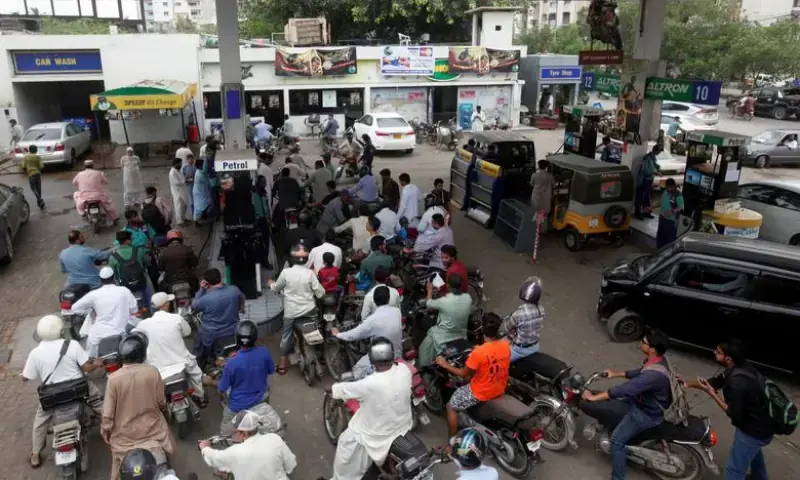
The federal government is considering freezing petroleum prices in Pakistan despite a sharp increase in global oil prices, in an effort to protect consumers from sudden fuel price hikes.
According to official sources, the government has already imposed a ban on the export of petroleum products while evaluating measures to stabilize domestic fuel prices.
Authorities are reportedly planning to utilize a Rs389 billion emergency fund to absorb potential increases in global oil prices rather than passing the entire financial burden on to the public.
Recent estimates based on the current pricing formula and tax structure suggest that the price of high-speed diesel (HSD) could increase by as much as Rs56 per litre, while petrol prices could rise by around Rs41 per litre.
Currently, petrol is being sold at over Rs322 per litre, while high-speed diesel is priced at more than Rs337 per litre in Pakistan.
In addition, estimates indicate that the price of kerosene oil could increase by approximately Rs7 per litre, while light diesel oil may see a significant increase of around Rs53 per litre.
The next official review of petroleum prices is scheduled for March 15. However, government ministers have hinted that the review could potentially be announced earlier, possibly on March 13.
According to sources, Prime Minister Shehbaz Sharif recently chaired a consultative meeting with federal and provincial officials where the issue of rising global oil prices and their impact on Pakistan was discussed.
The government’s strategy aims to shield domestic consumers from sudden price shocks caused by fluctuations in the international oil market.
By using the emergency fund, the authorities hope to temporarily absorb the financial impact of rising global fuel prices while maintaining stability in the domestic market.
However, officials have not yet confirmed how long the potential price freeze could remain in effect or the exact mechanism for utilizing the emergency fund.
Economic analysts say the government’s decision reflects its attempt to balance fiscal pressures with the need to protect consumers from rising living costs.