

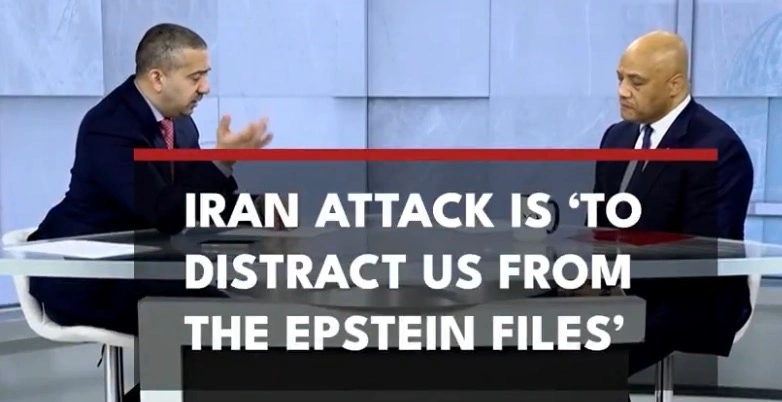
A US lawmaker has suggested that a recent military strike on Iran may have been used to divert public attention from the ongoing controversy surrounding the Jeffrey Epstein files.
Speaking in an interview highlighted by Zeteo, Democratic Representative André Carson claimed the attack appeared politically motivated rather than driven by urgent national security concerns.
According to Carson, intelligence briefings available to members of Congress did not show evidence of an imminent threat from Iran before the military operation was carried out.
“This was clearly an attack to distract us from the Epstein files,” Carson said, referring to the long-running investigation into the associates and network linked to convicted sex offender Jeffrey Epstein.
Questions Over Intelligence and Justification
Carson said the intelligence reports he reviewed did not indicate that Iran was preparing an immediate attack against the United States or its allies.
The absence of clear intelligence evidence has raised concerns among some lawmakers regarding the justification behind the military operation.
Reports suggest the strike involved forces from both the United States and Israel, targeting Iranian leadership and infrastructure. The development has significantly increased tensions across the Middle East and sparked debate in Washington, D.C. over whether the president had sufficient legal and strategic grounds to authorize the attack.
Epstein Files Continue to Stir Political Debate
The comments come at a time when pressure is mounting on the US government to release remaining documents related to the Epstein investigation.
Lawmakers from both political parties have called for greater transparency, arguing that millions of pages of documents related to Jeffrey Epstein’s network and alleged associates remain undisclosed.
Some critics believe major political or foreign policy actions could be used to shift public attention away from the scandal. Others strongly reject that view, insisting that national security decisions should not be interpreted through domestic political controversies.
Political Fallout
Carson’s remarks add to growing skepticism among members of Congress regarding recent foreign policy decisions.
Critics warn that escalating international conflicts without clear evidence of an immediate threat could weaken congressional oversight and undermine public trust in government institutions.
Meanwhile, the White House has not responded directly to Carson’s allegations. Officials maintain that any military action taken against Iran was necessary to counter security threats and protect US strategic interests.
A Divided Debate
The controversy reflects the increasingly polarized political climate in Washington, where both the Epstein investigation and US foreign policy decisions continue to generate intense debate.
While some lawmakers argue that national security matters are being politicized, others stress that transparency regarding both the Epstein files and military actions is essential for maintaining democratic accountability.
As congressional scrutiny intensifies, the issues surrounding the Epstein investigation and US foreign policy are expected to remain central topics in Washington’s political landscape in the coming months.