

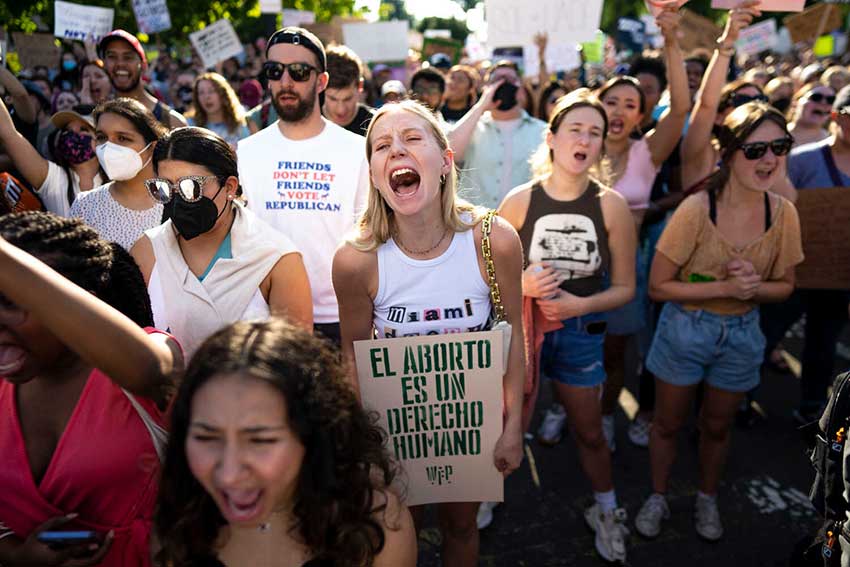
Since the U.S. Supreme Court overturned Roe v. Wade in 2022, the legal and legislative landscape around abortion has continued to shift dramatically. A wave of new rulings and state laws is testing the boundaries of abortion access, medication regulation, and states’ rights. Here are some of the most significant recent developments:
Texas: Private Citizens Can Sue Abortion Pill Distributors
In early September 2025, the Texas Legislature passed House Bill 7, a measure granting private citizens the right to sue individuals or organizations that manufacture, distribute, or mail abortion medication into or out of Texas.
-
Under this law, successful civil lawsuits must result in at least $100,000 in damages.
-
The law explicitly exempts the woman who takes the medication, medical personnel in emergencies, postal workers, and transportation providers.
-
Proponents argue it will discourage the flow of abortion pills into the state; opponents warn it could trigger “surveillance and fear” among patients and providers.
-
The bill awaits expected approval from Republican Governor Greg Abbott.
Texas is among approximately 14 states that have banned most abortions following the Dobbs decision.
New York vs. Texas: Shield Laws & Interstate Conflicts
Another major flashpoint involves New York’s shield law, which protects providers in states where abortion remains legal from out-of-state legal actions.
-
The specific case centers on Dr. Margaret Carpenter of New York, who faces legal action from Texas Attorney General Ken Paxton. Paxton alleges Carpenter violated Texas law by sending abortion pills to a Texas resident.
-
A Texas court fined Carpenter $113,000 and barred her from prescribing to Texas patients.
-
But an Ulster County, New York clerk refused to enforce the judgement, citing New York’s shield law. In turn, Paxton has sued the clerk.
-
New York Attorney General Letitia James has intervened in defense of Carpenter and the clerk, arguing that Texas cannot enforce its abortion laws in New York, especially through out‑of‑state claims.
-
The case raises serious constitutional questions, including how shield laws interact with the Full Faith and Credit Clause and whether states can unilaterally enforce abortion restrictions beyond their borders.
Broader Trends & Implications
These rulings and laws reflect a broader, ongoing tug‑of‑war between states that are tightening abortion restrictions and those seeking to preserve or expand abortion access. Some major trends include:
-
Medication Abortion Under Scrutiny
Many of the recent conflicts revolve around abortion pills (especially mifepristone), particularly how states can regulate their distribution, telehealth access, and mailing of the pills. Texas’s new law and the New York vs. Texas case are central examples. -
Inter‑State Legal Battles
Cases like New York’s shield law being tested by Texas demonstrate growing friction between states with opposing abortion laws. These cases could establish precedents regarding states’ abilities to enforce laws beyond their own borders. -
Legislative Moves & Ballot Measures
In some states, lawmakers are passing new restrictions. In others, rights are being reaffirmed via ballot initiatives or constitutional amendments. For example, voters in some states have approved protections for abortion up until viability, or restored rights previously lost. (Other examples beyond recent headlines include states like Missouri and Arizona in past years.) -
Judicial Review & Legal Uncertainty
Several laws have been blocked or struck down—either temporarily or permanently—by state courts or judges, often on constitutional grounds under state law. Montana’s recent judge ruling is one such case. Legal uncertainty remains high, as states, providers, and courts continue to contest what is, and is not, permissible under both state and federal law. -
Access Challenges & Health Outcomes
Restrictive laws, waiting periods, telehealth bans, and medication restrictions can impose delays and obstacles—distances, costs, legal risk—for people seeking abortions. These burdens may exacerbate health risks, disparities, and inequality. States that maintain legal access may see increases in patients traveling in from states with bans.
What to Watch Next
-
Supreme Court involvement: Given the constitutional issues, some of these state court cases (especially those involving interstate enforcement, shield laws, and medication restrictions) may end up before the U.S. Supreme Court. The composition of the Court and its prior rulings provide reason to expect more conservative interpretations of state and federal powers around abortion.
-
More state legislative sessions: States with anti‑abortion majorities may introduce new restrictions (e.g., lowering gestational limits, adding criminal penalties or civil liabilities, restricting telehealth or pill mailing) in upcoming sessions. Conversely, pro‑abortion rights states may further shield providers and fortify access via state law (or constitutional amendment).
-
Ballot initiatives: Public opinion remains divided in many places; ballot measures offer one path for citizens to directly shape abortion law. Where constitutional amendments or referenda are permitted, these may become the locus of political struggle.
-
Federal regulation and funding: While most abortion regulation is state‑based post‑Dobbs v. Jackson, federal agencies (FDA, HHS) and Congress still play roles—especially around medication approval, insurance, telehealth, and interstate commerce.
Conclusion
In the three years since Dobbs v. Jackson Women’s Health Organization eliminated federal constitutional protection for abortion that Roe v. Wade once provided, the U.S. legal landscape has not settled. Instead, it has become a patchwork: states differ dramatically in what is allowed, who can be held accountable, what medical procedures are permitted, and under what conditions.
Recent actions in Texas, New York, and Montana underscore that while some laws are tightening, others are defending or restoring access. The ongoing legal battles over medication abortion, state shield laws, and interstate enforcement may shape not just state policies—but national precedents concerning how far states can reach to regulate abortions and providers beyond their own borders.
As this story continues to unfold, the national conversation remains deeply polarized. But for many, one thing is clear: the stakes are extremely high—legally, medically, politically, and ethically.