
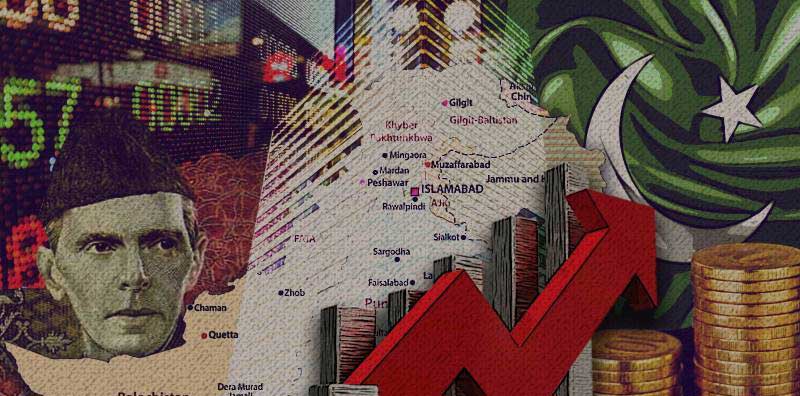
ISLAMABAD, September 11, 2025 — Pakistan’s fragile economy is once again at the brink of collapse, with rising debt, record-high inflation, and dwindling foreign reserves sparking nationwide concern. Economists warn that without structural reforms and decisive governance, the country could soon face a default-like scenario, despite ongoing support from the International Monetary Fund (IMF).
The country’s total public debt has crossed PKR 80 trillion, with external debt obligations rising sharply due to rupee depreciation and increased borrowing. Analysts say Pakistan is now caught in a cycle of borrowing to repay old loans, a pattern that is unsustainable in the long term.
Mounting Debt and IMF Pressures
The government recently secured a $7 billion loan package from the IMF under a 36-month Extended Fund Facility (EFF), but the conditions attached have sparked widespread political and public backlash. These include tough fiscal adjustments such as:
-
Reduction in energy subsidies
-
Increases in petroleum and electricity prices
-
Higher GST and withholding taxes
-
Cuts in development spending
“Pakistan’s debt-to-GDP ratio is now approaching 80%, which is dangerously high for an emerging economy,” said Dr. Hafeez Akbar, an Islamabad-based economist. “The IMF program may offer short-term liquidity, but it doesn’t resolve structural inefficiencies in tax collection, energy pricing, or public sector enterprises.”
Spiraling Inflation and Cost of Living Crisis
The burden of economic mismanagement is falling directly on the people. Inflation continues to hover around 29% year-on-year, with food inflation exceeding 35% in urban centers. Basic necessities such as wheat, sugar, and cooking oil have become unaffordable for a majority of low and middle-income households.
Petrol prices have crossed PKR 350 per litre, and electricity bills for small households have doubled in the last 12 months. These developments have led to rising public unrest, protests, and calls for policy reform.
“How can a family survive when prices go up every week and salaries remain stagnant?” asked Asma Bibi, a schoolteacher in Lahore. “We are being crushed by policies made for the IMF, not the people.”
Weak Currency and Declining Reserves
The Pakistani Rupee (PKR) continues to weaken against the US dollar, currently trading at over PKR 325/USD. The State Bank of Pakistan’s foreign reserves have marginally recovered to $9.1 billion, largely due to IMF disbursements and bilateral aid from Gulf nations and China.
However, with external debt repayments of over $25 billion due over the next two fiscal years, reserves remain highly vulnerable.
“Pakistan is in a dangerous position where every quarter depends on external borrowing just to stay afloat,” warned Dr. Shahid Anwar, a financial analyst. “This creates enormous uncertainty for investors, businesses, and the public.”
Political Instability Fuels Economic Anxiety
Economic instability is being exacerbated by political turmoil, with ongoing clashes between the federal government and opposition parties, delayed provincial elections, and widespread institutional distrust.
Foreign investors and rating agencies have expressed concern over the lack of political consensus on key economic reforms. Moody’s and Fitch have both downgraded Pakistan’s credit outlook, citing political risk and weak fiscal discipline.
“The lack of continuity in economic policies is a major deterrent to long-term investment,” said a report by Fitch Ratings in August 2025. “Pakistan’s economy needs stability and strategic governance more than ever.”
Growing Social Impact and Brain Drain
The impact of economic instability is not limited to numbers — it is reshaping society. Over 800,000 skilled workers and professionals have left Pakistan in the past 18 months, seeking better opportunities abroad. This brain drain is affecting healthcare, IT, education, and engineering sectors.
At the same time, unemployment has surged to 10.8%, with youth unemployment nearing 25%, according to the Labour Force Survey 2025.
Public trust in government institutions is at an all-time low. Many citizens feel they are paying the price for years of elite misgovernance, corruption, and short-term thinking.
What Lies Ahead?
Economists and policy experts argue that Pakistan’s path to recovery will require:
-
Broadening the tax base, especially targeting untaxed wealth
-
Reforming loss-making state-owned enterprises (SOEs)
-
Rationalizing energy pricing without burdening the poor
-
Enhancing export competitiveness
-
Investing in human capital and digital infrastructure
Some initiatives are already underway, such as the digitization of the Federal Board of Revenue (FBR), public-private partnerships in energy, and regional trade agreements. But critics say these measures are too little, too slow.
“We need a national economic charter agreed upon by all political parties,” said former finance minister Miftah Ismail. “Pakistan cannot afford to repeat the mistakes of the past every five years.”
International Support Is Not Enough
While international partners including China, Saudi Arabia, and the World Bank continue to offer financial assistance, it is clear that Pakistan must fix its own house first.
“Bailouts can only buy time,” said Dr. Rehana Malik of the Sustainable Growth Institute. “True economic stability comes from structural reforms, disciplined governance, and empowering citizens — not just from IMF packages.”
Conclusion
Pakistan’s economic challenges are severe, but not insurmountable. The current debt burden and instability are symptoms of deeper, long-standing issues: poor governance, political instability, and economic myopia. To emerge from this crisis, bold and painful reforms are needed — with a clear focus on long-term sustainability over short-term survival.