
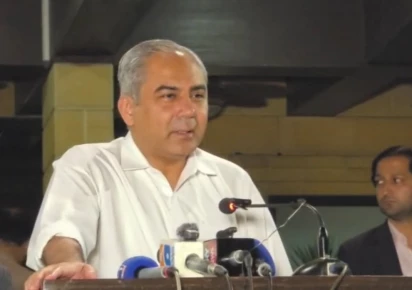
LAHORE: Interior Minister Mohsin Naqvi has hinted that Pakistan is moving towards what he described as a major “system reset”, saying reforms could improve governance and the overall functioning of the country.
Speaking at an event organised to welcome the newly elected office-bearers of the Lahore Chamber of Commerce and Industry (LCCI), Naqvi said meaningful reforms would require cooperation from the business community and other stakeholders.
He said Pakistan should study successful systems and experiences from developed countries while developing solutions suited to its own circumstances. The minister did not provide specific details of the proposed “system reset” but expressed confidence that changes could bring improvements in different areas.
Focus on exports and local manufacturing
Mohsin Naqvi also stressed the importance of increasing Pakistan’s exports and reducing dependence on imported products.
He said every dollar earned through exports was important and urged the business community to focus on expanding Pakistan’s manufacturing capacity.
Under the “Made in Pakistan” concept, the minister called for greater production of goods locally. He noted that Pakistan spends more than $40 billion annually on imports other than oil and suggested that increasing domestic manufacturing could help reduce this dependence over time.
Naqvi referred to Iran as an example of a country that has developed manufacturing capabilities despite facing sanctions and other economic challenges. He highlighted industries including automobiles and construction as examples of domestic production.
The minister argued that Pakistan could also increase its manufacturing capacity by encouraging local businesses and developing realistic economic targets.
Proposed Made in Pakistan plan
Naqvi suggested that the Lahore Chamber prepare a dedicated “Made in Pakistan” plan alongside efforts to increase exports.
He said realistic targets, consistent implementation and cooperation between the government and business community could help Pakistan make significant economic progress over the next three to four years.
The proposal comes amid continuing discussions about economic reforms, industrial development and reducing Pakistan’s dependence on imported goods.
Debate over administrative reforms
Naqvi’s comments also come amid a wider debate over governance and administrative reforms in Pakistan.
The interior minister has previously advocated the creation of additional provinces, arguing that smaller administrative units could improve governance, justice delivery and opportunities for the country’s growing population.
The proposal has received different responses from political parties. The Pakistan Peoples Party (PPP) has opposed dividing Sindh, while the Muttahida Qaumi Movement-Pakistan (MQM-P) has supported the creation of new provinces and called for wider political discussion on administrative devolution.
The Sindh Assembly has also rejected proposals to divide the province and maintained that changes to territorial boundaries would require broad political and public support.
Naqvi has continued to support the idea of creating new provinces, while saying that any such decision should ultimately reflect the will of the people.
His latest remarks place governance reforms, domestic manufacturing, exports and administrative restructuring within a broader discussion about possible changes to Pakistan’s economic and governance systems.