
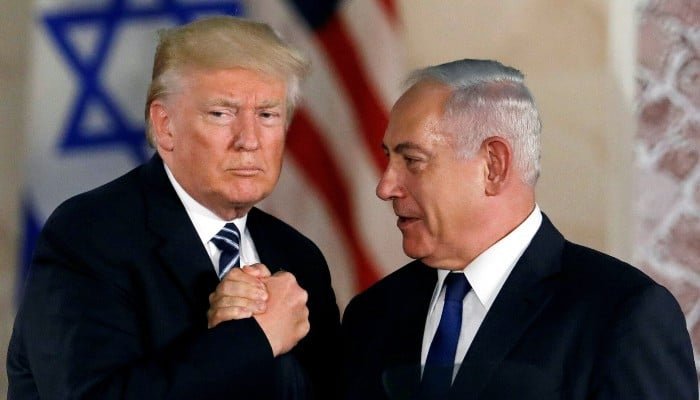
A revised Iran peace proposal reportedly backed by Pakistan and Qatar has added new strain to discussions between Donald Trump and Benjamin Netanyahu as indirect negotiations between Washington and Tehran continue through regional mediators.
According to reports cited by Geo News and Axios, Pakistan and Qatar worked alongside regional countries including Saudi Arabia, Turkiye, and Egypt to refine a new diplomatic proposal aimed at reducing tensions between the United States and Iran. The updated draft reportedly seeks to narrow differences over Iran’s nuclear programme and prevent renewed military escalation in the region.
The report stated that Trump and Netanyahu held a lengthy and difficult phone conversation regarding the proposal. Sources claimed Trump informed Netanyahu that mediators were preparing a formal letter of intent that could lead to a temporary agreement between the US and Iran, including a 30-day negotiation period covering Iran’s nuclear activities and the reopening of the Strait of Hormuz.
However, reports suggest Netanyahu remains deeply skeptical about the diplomatic process and reportedly favors stronger military action against Iran’s military infrastructure. Trump, meanwhile, continues to indicate that diplomacy remains possible if both sides agree to negotiations.
Iran has also confirmed that indirect exchanges with the United States are continuing through Pakistan. Iranian Foreign Ministry spokesman Esmaeil Baghaei said Tehran is reviewing the latest American response linked to Iran’s proposed 14-point framework. Pakistan’s Interior Minister Mohsin Naqvi was also reported to be in Tehran as part of ongoing mediation efforts.
The evolving diplomatic situation comes amid broader regional tensions following earlier military strikes, disputes over the Strait of Hormuz, and continuing disagreements over sanctions, frozen Iranian funds, and maritime security in the Gulf region.
Reports indicate that the proposed agreement could become a major turning point for Middle East diplomacy if negotiations succeed, although uncertainty remains over whether Iran and the United States can bridge remaining differences.