

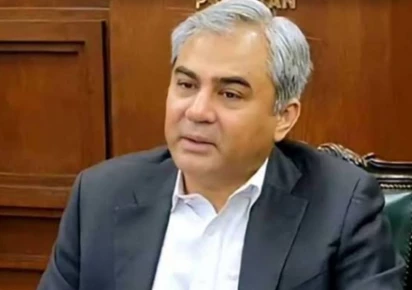
Recent remarks by Interior Minister Mohsin Naqvi, stating that Pakistan’s governance system has “collapsed,” have reignited debate over the country’s administrative challenges. However, a new analysis argues that the real cause of the governance crisis is the long-term weakening of Pakistan’s civil bureaucracy rather than the number of provinces or administrative units.
According to the analysis, Pakistan’s civil administrative system has gradually lost its ability to function effectively due to persistent political interference, weak accountability, and poor human resource management. These structural issues have reduced the efficiency of governance at the federal, provincial, divisional, and district levels.
The report suggests that the repeated reliance on task forces, special committees, and parallel administrative structures reflects the inability of the regular civil bureaucracy to perform its responsibilities effectively. While these temporary arrangements may address immediate challenges, they cannot replace a strong and professional civil service.
The analysis also highlights the role of the Special Investment Facilitation Council (SIFC), established to accelerate economic decision-making and attract investment. It argues that initiatives such as the SIFC emerged partly because the existing civil bureaucracy struggled to deliver timely administrative and economic solutions.
Punjab is cited as an example where comparatively lower levels of political interference have enabled the bureaucracy to perform more efficiently. The report argues that institutional autonomy and merit-based administration are essential for improving governance across Pakistan.
Governance experts have recommended restoring the authority of the Establishment Division at the federal level and the Services and General Administration Departments (S&GADs) in the provinces. These institutions should independently manage appointments, promotions, training, and career planning to ensure that administrative decisions are based on merit rather than political influence.
The analysis further proposes adopting a structured personnel management model similar to the military’s Military Secretary Branch at General Headquarters (GHQ). Under such a system, recruitment, promotions, training, and career progression would be governed through institutional discipline, professional evaluation, and merit-based performance instead of political considerations.
According to the report, political influence over transfers and appointments has weakened Pakistan’s civil service by placing officials in positions unrelated to their expertise and disrupting long-term career planning. Weak accountability mechanisms have further contributed to declining administrative performance across multiple sectors.
The report notes that concerns about civil service reforms are not new. More than 20 reform commissions and committees have examined Pakistan’s bureaucratic structure over the years, while at least six major reform studies between 1996 and 2008 highlighted recurring issues including politicization, lack of merit, and ineffective human resource management. However, most recommendations were never fully implemented.
The analysis concludes that Pakistan’s governance crisis is not caused by an inability to identify the problem but by a lack of political commitment to meaningful institutional reforms. It argues that rebuilding a professional, merit-based, and politically independent civil bureaucracy is more important than creating additional provinces or introducing temporary administrative arrangements.
Experts believe that strengthening the civil service through institutional reforms, transparent recruitment, professional career management, and protection from political interference is essential for improving governance, restoring public confidence, and ensuring long-term administrative stability in Pakistan.