
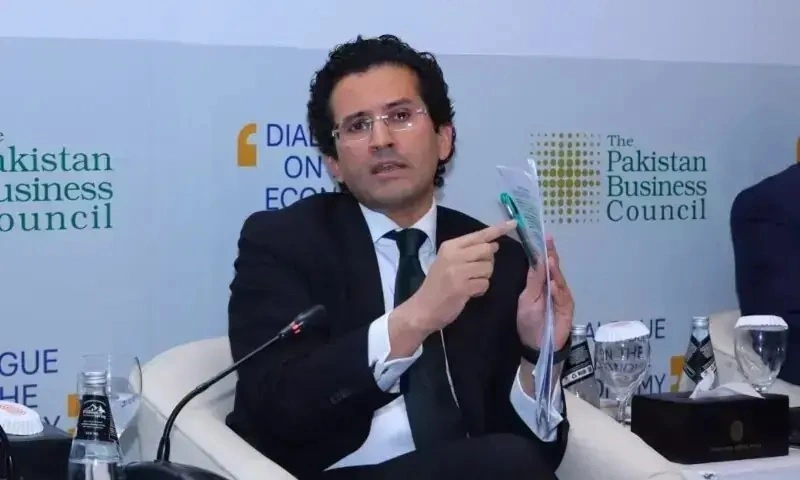
Federal Petroleum Minister Ali Pervaiz Malik has said that Pakistan’s transition to a daily petroleum pricing mechanism will improve transparency, eliminate opportunities for market manipulation, and establish a more competitive, consumer-friendly fuel pricing system.
Speaking during a meeting with key stakeholders from the petroleum industry, the minister described the reform as a major step towards a market-driven economy. He said the new mechanism would strengthen competition, reduce price distortions, and ensure fair pricing based on international market conditions.
The meeting took place a day after the government announced that retail petroleum prices would be adjusted daily in response to fluctuations in global oil markets, particularly amid renewed geopolitical tensions in the Middle East.
Under the new system, fuel prices will be determined through a transparent, formula-based mechanism driven by market fundamentals, reducing reliance on government intervention and the previous weekly pricing cycle.
According to the Petroleum Division, the meeting was attended by representatives of the Oil and Gas Regulatory Authority (OGRA), the Oil Companies Advisory Council (OCAC), the Oil Marketing Association of Pakistan (OMAP), refineries, oil marketing companies, and senior government officials.
Industry representatives broadly welcomed the initiative, describing it as a positive step towards deregulating Pakistan’s petroleum sector and encouraging a more competitive pricing environment.
Minister Malik informed participants that the reform had been introduced on the directives of Prime Minister Shehbaz Sharif and approved by the federal cabinet as part of broader efforts to establish a rules-based petroleum pricing regime.
Officials explained that the daily pricing mechanism forms an important part of the government’s phased deregulation strategy, gradually reducing state intervention and allowing market forces to determine fuel prices, similar to daily foreign exchange rate movements.
The minister said the Petroleum Division, in collaboration with OGRA and industry stakeholders, is finalising Standard Operating Procedures (SOPs) to ensure a smooth implementation of the new system.
Technical matters, including the Inland Freight Equalisation Margin (IFEM), refinery adjustments, and true-up mechanisms, are also being addressed through consultations with stakeholders.
OGRA informed the meeting that its internal systems have been upgraded to support daily fuel price calculations and publish daily petroleum price updates to improve transparency for consumers.
The meeting also reviewed supply chain logistics, inventory management, and real-time data systems required for the successful implementation of the reform. The government assured stakeholders that a dedicated committee has been established to resolve operational challenges through continuous consultation.
Minister Malik acknowledged that implementing major structural reforms may present challenges but reaffirmed the government’s commitment to protecting consumers while ensuring the long-term sustainability and efficiency of Pakistan’s petroleum sector.
The announcement follows the government’s recent decision to increase petrol prices by Rs5.44 per litre and high-speed diesel by Rs31.05 per litre, reflecting higher international oil prices and rising import costs linked to regional tensions.