
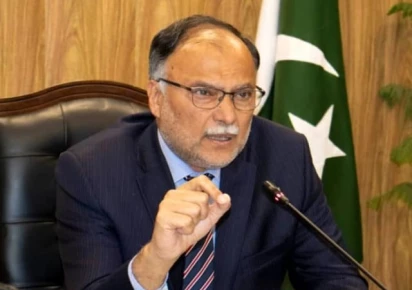
Planning Minister Ahsan Iqbal has ruled out an immediate reduction in Pakistan’s petroleum levy, saying the government may consider lowering the charges gradually in the next federal budget. His statement comes amid pressure from Jamaat-e-Islami (JI) to reduce taxes on petroleum products as international oil prices remain elevated.
Iqbal said a committee had been formed to examine proposals for a phased reduction. The committee will include Deputy Prime Minister Ishaq Dar, Planning Minister Ahsan Iqbal and Rana Sanaullah, while Jamaat-e-Islami will nominate three representatives. The group is expected to discuss possible public relief measures while taking the country’s financial position into account.
The minister said the government was trying to provide relief within its available resources but could not adopt measures that might affect economic stability. He also noted that international oil prices remained uncertain and could rise further depending on developments in the Middle East.
Pakistan currently imposes a petroleum levy of Rs80 per litre, a climate levy of Rs5 per litre and customs duty of Rs20.56 per litre, bringing the total fuel-related charges to nearly Rs106 per litre. Iqbal also said approximately 12.7 million people had registered for a relief programme aimed at low-income groups.
Meanwhile, Petroleum Minister Ali Pervaiz Malik informed the National Assembly that the government collected Rs4.4 trillion through the petroleum levy between fiscal years 2022-23 and 2025-26. The collection exceeded the target of Rs4.2 trillion by around Rs227 billion. In the last fiscal year, provisional collections reached Rs1.567 trillion against a target of Rs1.468 trillion.
The government has set a petroleum levy collection target of Rs1.676 trillion for the current fiscal year. Malik said the revenue collection was also linked to fiscal targets agreed with the International Monetary Fund under its Extended Fund Facility programme. He added that a proposal made in May to reduce the annual collection target to Rs1 trillion and set the levy at Rs50 per litre had not been adopted.
The petroleum minister also told the National Assembly that Pakistan had sufficient petrol and high-speed diesel stocks to meet domestic demand. As of September 22, petrol stocks stood at approximately 395,000 tonnes, with another 56,000 tonnes at berth and 55,000 tonnes at outer anchorage. The total available supply was around 506,000 tonnes, estimated to cover approximately 22 days of average consumption.
High-speed diesel stocks stood at about 568,000 tonnes, providing around 30 days of supply. For September, petrol demand was projected at 692,000 tonnes, while domestic refineries were expected to supply 262,000 tonnes and oil marketing companies had planned imports of around 511,000 tonnes. No diesel imports were planned for the month because of available stocks and expected domestic production.
Malik said the Oil and Gas Regulatory Authority was monitoring the fuel supply chain in coordination with refineries, oil marketing companies and government departments. Oil marketing companies had also been directed to investigate unusual sales to prevent hoarding, diversion and misuse.
The minister further disclosed that Rs66.5 billion in price differential claims submitted by oil marketing companies remained outstanding. The government had disbursed Rs53.8 billion out of total claims worth Rs120.3 billion, while further payments would depend on documentation, verification and an audit. The proposed committee’s discussions will help determine whether a phased petroleum levy reduction can be accommodated in the next federal budget.