

The Makkah Joint Defence Agreement between Pakistan, Saudi Arabia and Türkiye is entering a new phase as the regional security environment continues to evolve and the three countries work to translate their defence commitments into practical cooperation.
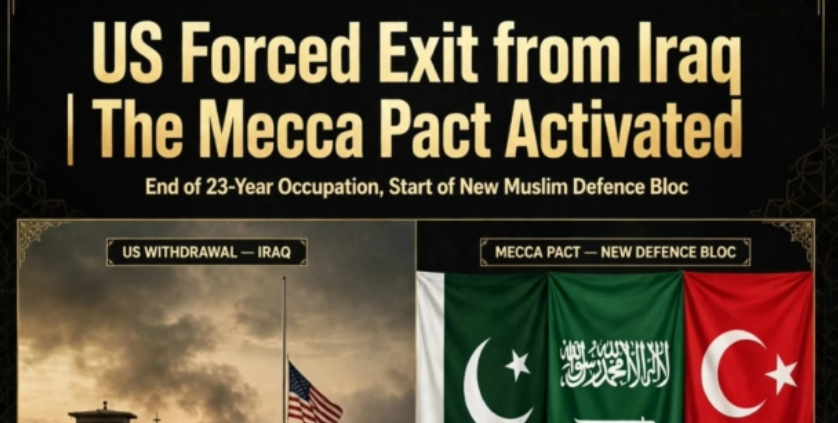
Signed in Makkah on August 7, 2026, the agreement states that an armed attack against any one of the three countries will be regarded as an attack against all three. It also provides for enhanced defence cooperation and is intended to strengthen collective deterrence. Pakistan’s Foreign Ministry has described the accord as defensive in nature and said it does not replace existing bilateral or multilateral agreements.
The agreement has gained additional attention amid significant changes in the Middle East’s security landscape. The United States completed the withdrawal of its remaining forces from Iraq on September 30, ending a military presence that began with the 2003 invasion. Reuters reported that the departure has raised concerns among Iraqi and Kurdish officials about a potential security vacuum, Iranian influence and the possibility of Islamic State militants exploiting gaps in security.
The security situation in Iraq and the wider region has added context to discussions about closer coordination among Pakistan, Saudi Arabia and Türkiye. Recent meetings of the three countries’ military chiefs in Riyadh focused on strengthening intelligence sharing, military coordination and the integration of defence capabilities. The talks followed the signing of the Makkah agreement and came amid broader regional security concerns.
Each country also brings different strategic capabilities and security priorities to the arrangement. Pakistan has extensive military and counterterrorism experience, Türkiye has a major defence industry and NATO membership, while Saudi Arabia has significant financial resources and a strategically important position in the Gulf.
At the same time, the three countries face different security concerns. Pakistan’s defence planning is strongly influenced by developments along its eastern and western borders, while Saudi Arabia faces security challenges connected to the Gulf, Yemen and the Red Sea. Türkiye remains closely engaged with security developments in Syria, Iraq and its wider neighbourhood.
These differences make implementation an important issue for the agreement. The collective-defence provision establishes a broad commitment, but practical questions about military assistance, coordination, deployment decisions and operational procedures would become particularly important during a major security crisis.
Recent developments indicate that the agreement is being accompanied by concrete discussions on defence cooperation rather than remaining solely a political declaration. The September 2026 Riyadh meeting between the three countries’ military chiefs highlighted intelligence sharing, military coordination and capability integration as areas for closer cooperation.
The agreement also does not formally replace the three countries’ existing international relationships. Pakistan’s Foreign Ministry has stated that the Makkah Accord does not abrogate or replace existing bilateral or multilateral agreements with other countries or organisations.
Its longer-term significance will therefore depend largely on implementation. Joint exercises, intelligence cooperation, defence planning and clearly established procedures could shape how effectively the framework operates in response to future security challenges.
With the US military withdrawal from Iraq now completed and security concerns continuing across parts of the Middle East, the Makkah Joint Defence Agreement is likely to receive greater attention. Its practical impact will depend on how Pakistan, Saudi Arabia and Türkiye develop the commitments made in the agreement into sustained mechanisms for defence coordination and collective security.