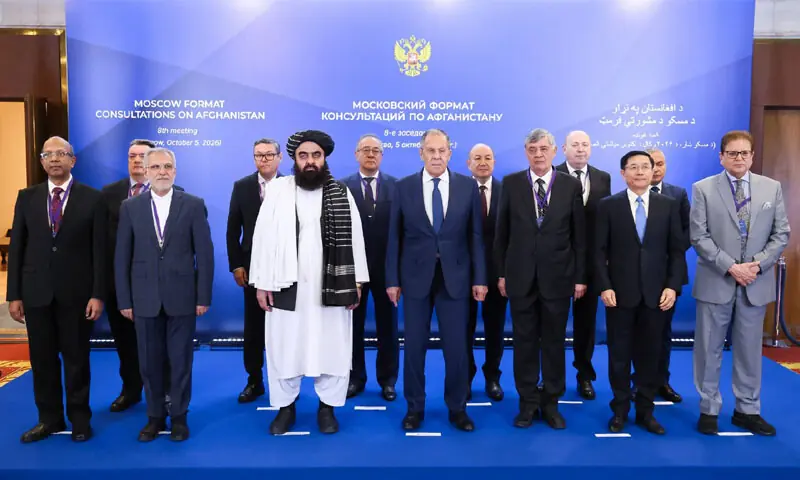

The eighth edition of the Moscow Format regional consultations on Afghanistan ended without a joint statement on Monday after Pakistan and Afghanistan failed to reach an agreement over references to terrorism and cross-border attacks.
Russian presidential envoy for Afghanistan Zamir Kabulov said Moscow regretted that participants were unable to agree on a final document. He said the main disagreement occurred between the Pakistani and Afghan delegations, marking a rare failure for the regional diplomatic forum.
The Moscow Format brought together special envoys and senior officials from Afghanistan, China, India, Iran, Kazakhstan, Kyrgyzstan, Pakistan, Russia, Tajikistan and Uzbekistan. Belarus and Egypt also participated as guest countries. The diplomatic format has been active since 2016-17 and is considered one of the important regional platforms for discussions on Afghanistan.
Pakistan’s special envoy for Afghanistan, Mohammad Sadiq, told the meeting that Islamabad had continued political and diplomatic engagement with the Taliban government to address terrorism originating from Afghan territory. He said Pakistan wanted regional peace and stability but claimed that terrorist attacks from Afghan soil had increased despite Islamabad’s efforts to engage with Kabul.
The Afghan Taliban delegation rejected Pakistan’s position. Foreign Minister Amir Khan Muttaqi criticised Islamabad’s policies towards Afghanistan and accused Pakistan of using military pressure, refugees, students and transit routes as leverage.
Despite the disagreement, Muttaqi maintained that issues between Pakistan and Afghanistan could be resolved through dialogue and diplomacy.
Russia offered to assist in reducing tensions between the two neighbouring countries. Zamir Kabulov said Moscow was prepared to help if both sides requested assistance, although he stressed that resolving bilateral disputes was not the primary purpose of the Moscow Format.
Russian Foreign Minister Sergey Lavrov, who opened the meeting, expressed support for assistance to Afghanistan and said strengthening the country’s counterterrorism capabilities was in the interests of the wider region. He also warned against attempts by NATO to establish military infrastructure in Afghanistan or neighbouring countries.
The failure to issue a joint statement highlights the growing diplomatic tensions between Pakistan and Afghanistan. Disagreements over terrorism, security and the activities of militant groups operating from Afghan territory continue to complicate relations between Islamabad and Kabul.
Meanwhile, the International Criminal Court (ICC) unsealed arrest warrants for two Afghan Taliban ministers accused of crimes against humanity involving gender-based persecution.
The warrants target Afghanistan’s Education Minister Habibullah Agha and Higher Education Minister Neda Mohammad Nadeem. The warrants were issued in September 2025 but remained sealed until Monday.
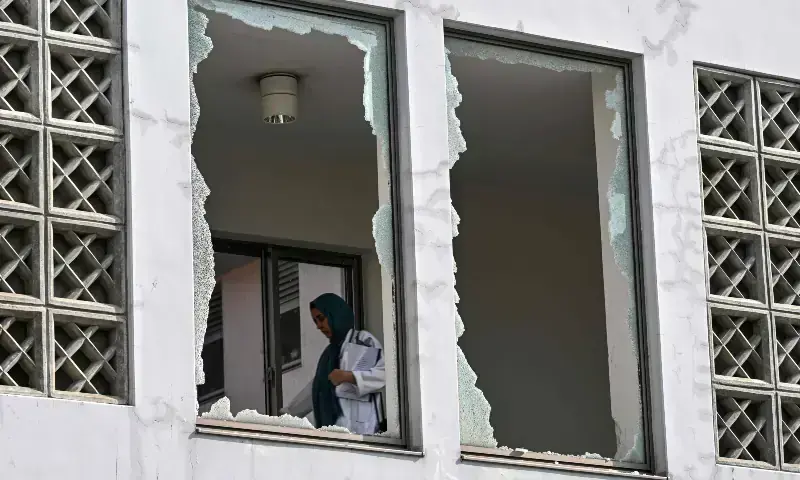
The two officials are accused of implementing policies that restrict the rights of women and girls, including restrictions preventing girls from continuing education beyond primary school and preventing women from accessing higher education.
The ICC had previously authorised warrants against Taliban Supreme Leader Haibatullah Akhundzada and Supreme Court President Abdul Hakim Haqqani in July 2025.
The Taliban condemned the ICC’s position and rejected the arrest warrants against Afghan leaders.
The developments at the Moscow Format meeting and the ICC highlight the continuing diplomatic, security and human-rights challenges surrounding Afghanistan and its relations with neighbouring countries and the international community.
Moscow Format Afghanistan Talks End Without Joint Statement