
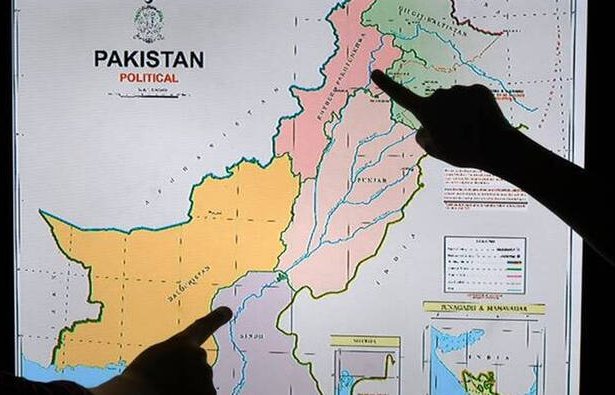
A renewed debate over the creation of new provinces in Pakistan has gained political momentum after two key coalition partners publicly endorsed Interior Minister Mohsin Naqvi’s proposal to restructure the country’s administrative system. However, the ruling Pakistan Muslim League-Nawaz (PML-N) has yet to issue an official position, adding uncertainty to the growing national discussion.
The debate began after Mohsin Naqvi argued that Pakistan’s existing administrative structure has become increasingly ineffective in addressing governance challenges. He called for a national consensus on creating smaller provinces to improve governance, administrative efficiency, and public service delivery.
The proposal quickly received support from coalition allies, including the Muttahida Qaumi Movement-Pakistan (MQM-P) and the Istehkam-e-Pakistan Party (IPP).
Federal Health Minister Mustafa Kamal described the proposal as a national necessity rather than a political choice. He stressed that decentralizing administrative authority is essential for improving governance and delivering public services more effectively. The MQM-P has consistently advocated the creation of an additional province in Sindh, making the party one of the strongest supporters of administrative restructuring.
Meanwhile, Privatization Minister Abdul Aleem Khan, representing the IPP, also backed the proposal. He suggested that each of Pakistan’s four existing provinces could eventually be divided into three administrative regions to bring government institutions closer to the public. According to Aleem Khan, smaller provinces would reduce administrative burdens and make it easier for citizens to access government services without traveling long distances.
Despite growing support from coalition partners, the proposal faces significant constitutional hurdles. Under Pakistan’s Constitution, altering provincial boundaries requires approval by a two-thirds majority in the affected provincial assembly, making the process politically challenging.
The Pakistan Peoples Party (PPP), which governs Sindh and is also part of the ruling coalition, has expressed reservations about the proposal. Party leaders have warned that creating new provinces could create additional political and administrative complications rather than solving existing governance problems.
Opposition parties have also criticized the proposal, arguing that the government lacks the political mandate for such a major constitutional change. They maintain that strengthening democratic institutions and improving governance should remain the government’s primary focus instead of redrawing provincial boundaries.
Political analysts remain divided over the issue. Some believe that creating new provinces could improve administrative efficiency and public service delivery, while others caution that it could deepen ethnic and regional divisions. Some observers also view the debate as an attempt to shift public attention away from other pressing national issues, including political developments in Azad Jammu and Kashmir and ongoing security concerns in Balochistan.
Many governance experts argue that empowering local governments under the 18th Constitutional Amendment would be a more practical solution for improving governance without changing provincial boundaries. Mustafa Kamal also acknowledged that stronger local governments remain essential regardless of whether new provinces are eventually established.
With coalition partners expressing differing views and the PML-N yet to announce its official position, the debate over new provinces is expected to remain a major political issue in Pakistan in the coming months.