
ISLAMABAD: Pakistan has ruled out any change in its policy towards Afghanistan’s Taliban government, with officials describing recent diplomatic and institutional contacts as routine engagements rather than signs of renewed political dialogue.
The clarification comes amid speculation that Islamabad could be reconsidering its approach following reports that Afghanistan’s acting Interior Minister Sirajuddin Haqqani had offered talks with Pakistan and proposed a possible mechanism to address unresolved bilateral issues.
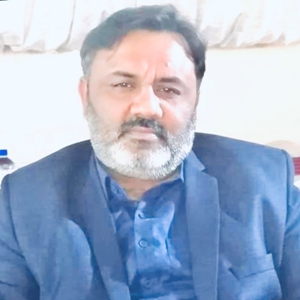
Speculation also increased after Afghanistan’s ambassador in Islamabad was invited to address an event at the National Defence University (NDU). Pakistani officials, however, said the invitation should not be interpreted as a move towards political engagement with the Taliban authorities in Kabul.
Officials noted that foreign diplomats have previously been invited to Pakistani academic and defence institutions, including India’s high commissioner, arguing that such interactions alone do not indicate a change in foreign policy.
The Afghan envoy’s appearance at the NDU later became contentious after he was accused of publicly discussing matters understood to have been part of an off-the-record interaction. The disclosure reportedly upset Pakistani authorities, who viewed it as a violation of the understanding governing the engagement.
Foreign Office spokesperson Tahir Andrabi also played down the significance of the NDU invitation during the ministry’s weekly briefing, describing such contacts as routine academic exchanges and stressing that they did not represent a change in Pakistan’s policy towards Kabul.
Pakistan’s position remains primarily focused on security concerns along its western border. Islamabad has repeatedly demanded concrete and verifiable action by the Taliban authorities against banned militant organisations operating from Afghan territory, particularly the Tehreek-e-Taliban Pakistan (TTP), which Pakistan accuses of planning and carrying out attacks inside the country.
Pakistani officials maintain that verbal assurances are insufficient and that tangible action against groups responsible for attacks on Pakistan is required. Islamabad has also raised concerns over other militant organisations allegedly operating from Afghan soil, including the Balochistan Liberation Army (BLA).
Against this backdrop, officials said there was currently no indication that Pakistan was preparing to abandon its existing position or open a new political track with the Taliban government.
Meanwhile, China continues diplomatic efforts aimed at easing tensions between Pakistan and Afghanistan. Chinese Special Envoy for Afghan Affairs Ambassador Yue Xiaoyong recently visited Islamabad to discuss regional developments and strained relations between the two neighbouring countries.
Beijing is also exploring the possibility of reviving the Urumqi process, a Chinese initiative aimed at facilitating dialogue between Islamabad and Kabul. However, diplomatic sources remain cautious about an early revival of the mechanism, citing ongoing disputes over militant activity and the deterioration in bilateral relations.