
When Schools Become Unsafe
Schools are places where children receive education, dream of a better future and lay the foundation for successful lives. Parents send their children to educational institutions with the hope that they will remain safe, gain knowledge and grow into responsible individuals. However, the tragic school roof collapse in Peshawar has confronted the nation with a painful question: Are our schools providing children with a safe future, or can they become death traps because of negligence and the failure to enforce safety standards?
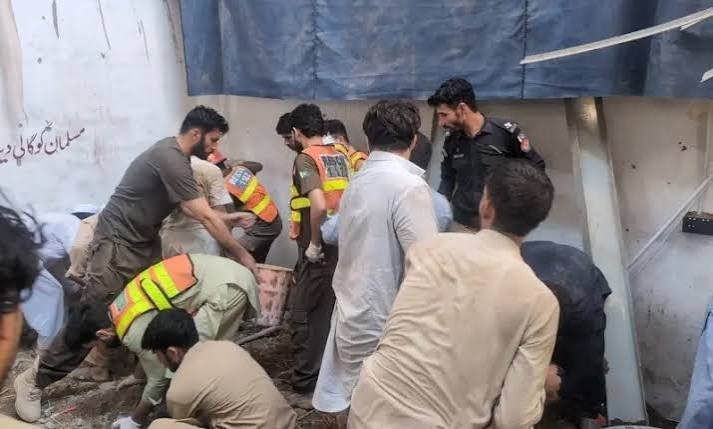
On October 15, 2026, a tragic roof collapse at the privately run Al-Khair Education Centre in Peshawar’s Dir Colony area claimed the lives of dozens of children and a teacher, while several others were injured. Rescue teams worked to recover people trapped beneath the rubble, while distressed parents desperately searched for their children. The tragedy plunged numerous families into grief and raised serious questions about the safety of educational buildings across the country.
National and international media reported the incident, while authorities reportedly initiated investigations to determine its causes. The actual reasons behind the collapse and the identification of those responsible must be established through a transparent and impartial investigation.
One fact, however, is undeniable: the safety of children in educational institutions must never be treated as a secondary concern.
A Tragedy That Demands Accountability
Every child has the right to receive an education in a safe environment. This right should not depend on whether a school charges high or low fees, whether it is public or private, or whether it is located in a major city or a remote area.
Parents spend a significant portion of their limited incomes on school fees because they want their children to progress in life through education. They should not have to worry about whether the walls, roofs, staircases and classrooms of their children’s schools are structurally safe.
The Peshawar tragedy raises several fundamental questions. Was the building properly inspected? Did it meet the relevant construction and safety standards? Had any structural weaknesses been identified before the incident? Were the relevant authorities fulfilling their inspection and supervisory responsibilities? Did the school administration and building owners comply with the applicable regulations?
These questions must be answered through concrete evidence rather than speculation or statements intended merely to calm public anger.
If negligence is established through the investigation, those responsible must face legal consequences. Accountability must extend to every individual or institution whose proven negligence or failure contributed to the tragedy, regardless of their position or influence.
An arrest or the formation of an inquiry committee may be an initial step, but neither automatically guarantees justice. The public deserves a credible investigation, appropriate legal action and practical measures to prevent similar incidents in the future.
The Failure of Inspections and Enforcement
One of the most alarming aspects of such tragedies is that serious safety hazards in buildings may remain unnoticed or ignored until a major disaster occurs.
School safety should not depend solely on assurances from the administration or the outward appearance of a building. Structural assessments by qualified professionals are essential, particularly in buildings where additional floors have been constructed or changes have been made to the original design.
All relevant parties have responsibilities in this regard. School administrations must ensure proper maintenance of their buildings. Building owners and construction contractors must comply with applicable construction regulations. Regulatory bodies and local authorities must fulfil their legal duties by conducting inspections and taking action against violations.
When safety inspections exist only on paper, their purpose is defeated. When violations are ignored, regulations lose their effectiveness. And when authorities fail to respond promptly to credible reports of danger, the consequences can be devastating.
The government must determine the actual causes of the Peshawar tragedy and establish whether it resulted from individual negligence, weaknesses in the inspection system or broader failures in regulatory enforcement. Conclusions must be based on evidence, but the possibility of systemic failure must not be dismissed without proper investigation.
Affordable Education Must Not Mean Unsafe Education
Across Pakistan, many families depend on low-cost private schools because affordable alternatives in the public education sector are limited. Such institutions play an important role in providing educational opportunities, particularly in areas where government facilities are insufficient.
However, low school fees can never justify compromising children’s safety.
At the same time, the regulatory system must be clear, fair and practical. Authorities should provide clear safety standards, technical guidance and workable procedures for compliance, while taking firm action against serious violations.
Schools whose buildings cannot be demonstrated to be safe must not be allowed to put the lives of children and staff at risk.
The objective should not be to shut down educational institutions arbitrarily. Rather, every institution must meet the minimum safety standards necessary to protect students and teachers before providing education.
What Needs to Be Done Now?
The Peshawar tragedy must lead to a comprehensive review of school safety across Pakistan, rather than a few days of public concern and official statements.
First: Conduct safety inspections of all schools. Public and private educational buildings should undergo risk-based inspections by qualified structural and construction professionals. Buildings suspected of having structural weaknesses must be assessed immediately. Unsafe areas should not be used until their safety has been established.
Second: Maintain verifiable inspection records. Authorities should keep updated records of inspections, safety certificates, identified defects and corrective measures. Parents should also have access to essential safety information about their children’s schools.
Third: Respond promptly to complaints. Parents, teachers and community members should have accessible channels for reporting cracks, unsafe construction, unauthorised additional floors, overcrowding and other hazards. Every credible complaint should be assessed without unnecessary delay.
Fourth: Enforce building regulations. New school buildings and major structural modifications must comply with applicable construction standards. Unauthorised construction and unsafe additional floors must be addressed through lawful action.
Fifth: Improve emergency preparedness. Schools should have clear evacuation procedures, safe and accessible exits, emergency communication systems, first-aid arrangements and regular emergency drills.
Sixth: Ensure transparent accountability. The findings of the Peshawar investigation should be made public to the extent permitted by law. Proven negligence must lead to appropriate action, while reforms should have clear deadlines and effective monitoring mechanisms.
Finally: Guarantee equal protection for every child. Safety standards must apply to every school, whether public or private, located in a major city or a small community, and regardless of how much it charges in fees.
The Government Must Move Beyond Announcements
After a major tragedy, officials often express grief, announce investigations and promise reforms. Such responses may be necessary, but their real value depends on the practical measures that follow.
The people of Pakistan need more than statements of condolence. They need effective action to identify dangerous buildings, correct safety violations and hold responsible individuals accountable under the law.
A transparent investigation into the Peshawar incident should establish the circumstances surrounding the collapse, examine the construction and condition of the building, assess whether the relevant authorities fulfilled their responsibilities and determine whether any failures contributed to the disaster.
Based on the findings, the government should develop a practical action plan with clear deadlines for every measure. Progress must be monitored, and the public should be informed about the implementation of safety reforms.
Most importantly, safety inspections must not stop when media attention fades. Protecting schools requires continuous assessments, proper maintenance and effective enforcement of regulations.
The Human Cost Goes Beyond Numbers
Behind every child who loses their life is a future cut short. Behind every injured student is a family experiencing fear, uncertainty and pain. Parents who sent their children to school expecting an ordinary day have instead faced a tragedy that no family should ever have to endure.
Injured children must receive appropriate medical treatment and continued care. Bereaved families deserve compassion, timely assistance and access to justice. Students, teachers and families affected by the tragedy may also need psychological support to cope with the trauma.
These responsibilities must continue long after rescue operations end and media coverage moves on to other stories.
Children are not merely numbers in a casualty report. They are the hopes of their families and the future of the country. Protecting them is a fundamental responsibility of every institution entrusted with their education and care.
Schools Must Be Places of Hope, Not Fear
The Peshawar tragedy has raised serious questions about building safety, institutional responsibility and the enforcement of regulations. Whether the investigation identifies individual negligence or broader administrative weaknesses, the response must be serious, transparent and measurable.
Pakistan cannot bring back the children who lost their lives. However, one meaningful way to honour their memory is to ensure that other children are protected from similar dangers.
A safe classroom is not a luxury; it is a basic requirement of education. A school building should be a place where children can learn with confidence and parents can send them without fearing for their lives.
The real test for the authorities will not be the number of statements issued after the tragedy. It will be whether dangerous buildings are identified, safety standards are enforced, negligence is addressed and lasting reforms are implemented.
Schools exist to educate children, not to put their lives at risk. The Peshawar tragedy must mark the beginning of a new era in school safety, rather than becoming yet another disaster that the nation remembers only until the next tragedy occurs.