
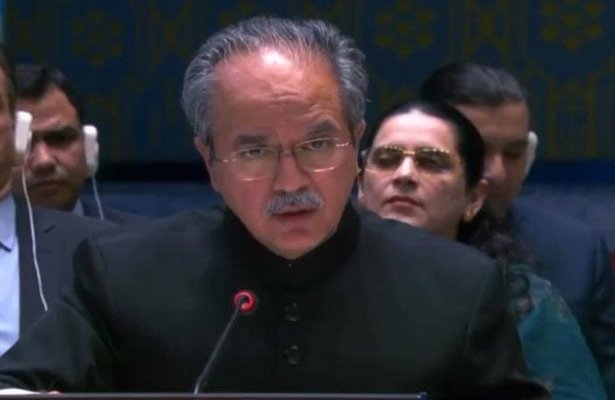
Pakistan has expressed strong concern at the United Nations Security Council over Israel’s controversial E1 settlement plan, warning that the proposed project could seriously threaten the creation of a viable, geographically connected, and independent Palestinian state. The statement reinforces Pakistan’s longstanding support for Palestinian self-determination and a peaceful resolution based on the internationally recognized two-state solution.
During a UN Security Council debate on the situation in the occupied Palestinian territories, Pakistan’s representative highlighted growing international concerns regarding continued settlement expansion. He stated that the proposed E1 development poses a significant challenge to the territorial continuity required for the establishment of a sovereign Palestinian state.
Referring to the latest report presented by the United Nations Secretary-General, the Pakistani envoy noted that the approval and advancement of approximately 4,750 housing units in occupied Palestinian territories reflects an alarming trend. According to Pakistan, continued settlement construction risks making future peace negotiations increasingly difficult while undermining international efforts to achieve lasting stability in the region.
Pakistan described the E1 settlement plan as one of the most serious obstacles to the internationally supported two-state solution. The project has been widely criticized by numerous governments and international organizations, which argue that it could divide key Palestinian territories and significantly reduce the possibility of establishing a contiguous Palestinian state.
The Pakistani representative also raised concerns over financial restrictions imposed on the Palestinian Authority. He stated that withholding funds intended for Palestinian institutions weakens governance, affects public services, and creates additional economic and humanitarian challenges for the Palestinian people.
According to Pakistan, these measures not only hinder administrative functions but also weaken the institutional foundations necessary for long-term peace, political stability, and sustainable development in the occupied Palestinian territories.
Reaffirming its consistent foreign policy position, Pakistan once again called for renewed diplomatic efforts aimed at achieving a comprehensive, just, and lasting settlement of the Israeli-Palestinian conflict. Islamabad reiterated its support for an independent Palestinian state based on internationally recognized borders and relevant United Nations resolutions.
The statement comes at a time of heightened international attention on developments in the occupied Palestinian territories, where settlement expansion continues to generate widespread diplomatic concern. Many international observers believe that continued construction in disputed areas could further diminish prospects for meaningful peace talks and a negotiated two-state solution.
Pakistan emphasized that respect for international law, implementation of UN resolutions, and renewed diplomatic engagement remain essential for achieving lasting peace, regional stability, and the protection of Palestinian rights.