

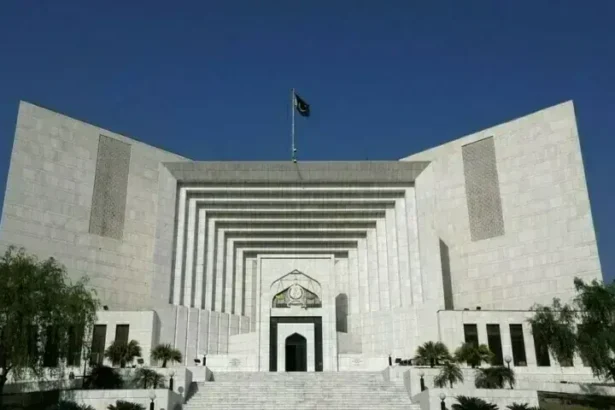
The Supreme Court of Pakistan has delivered a landmark judgment affirming that women’s inheritance rights under Sharia are legally protected and cannot be taken away through fraudulent claims, social pressure, or fabricated verbal gifts. The ruling reinforces that every legal heir automatically acquires their rightful share of inheritance immediately after the death of a family member, regardless of customary practices or family arrangements.
The judgment was authored by Justice Shahid Bilal Hassan, who emphasized that inheritance is a fundamental right granted under Islamic law rather than a favor extended by male family members. The court observed that depriving women of their lawful inheritance contradicts both the principles of Islam and the constitutional guarantee of justice.
The case involved a family property dispute dating back to 1955 after the death of a landowner named Roshan. Although an official inheritance mutation was recorded, another mutation filed on the same day falsely claimed that the widow and daughters had verbally gifted their entire shares to the deceased’s sons. The female heirs consistently argued that the alleged verbal gift was fabricated to deprive them of their legal rights.
After decades of litigation, the Supreme Court declared the disputed mutation illegal and void, overturning an earlier decision of the Lahore High Court. The apex court ordered revenue authorities to correct official land records and ensure that the rightful shares of the female heirs are allocated without further delay.
The court also highlighted that women across Pakistan continue to face challenges in obtaining inherited property because of forged documents, manipulation of land records, family pressure, and prolonged legal battles. It directed courts and revenue officials to adopt an approach that protects the rights of women instead of allowing procedural loopholes to defeat justice.
The decision is being regarded as a significant step toward strengthening women’s property rights in Pakistan while reaffirming the importance of Islamic inheritance principles. Legal experts believe the judgment will serve as an important precedent for future inheritance disputes and encourage stricter enforcement of women’s legal and constitutional rights across the country.