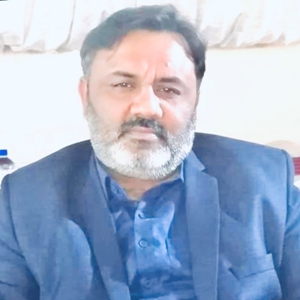

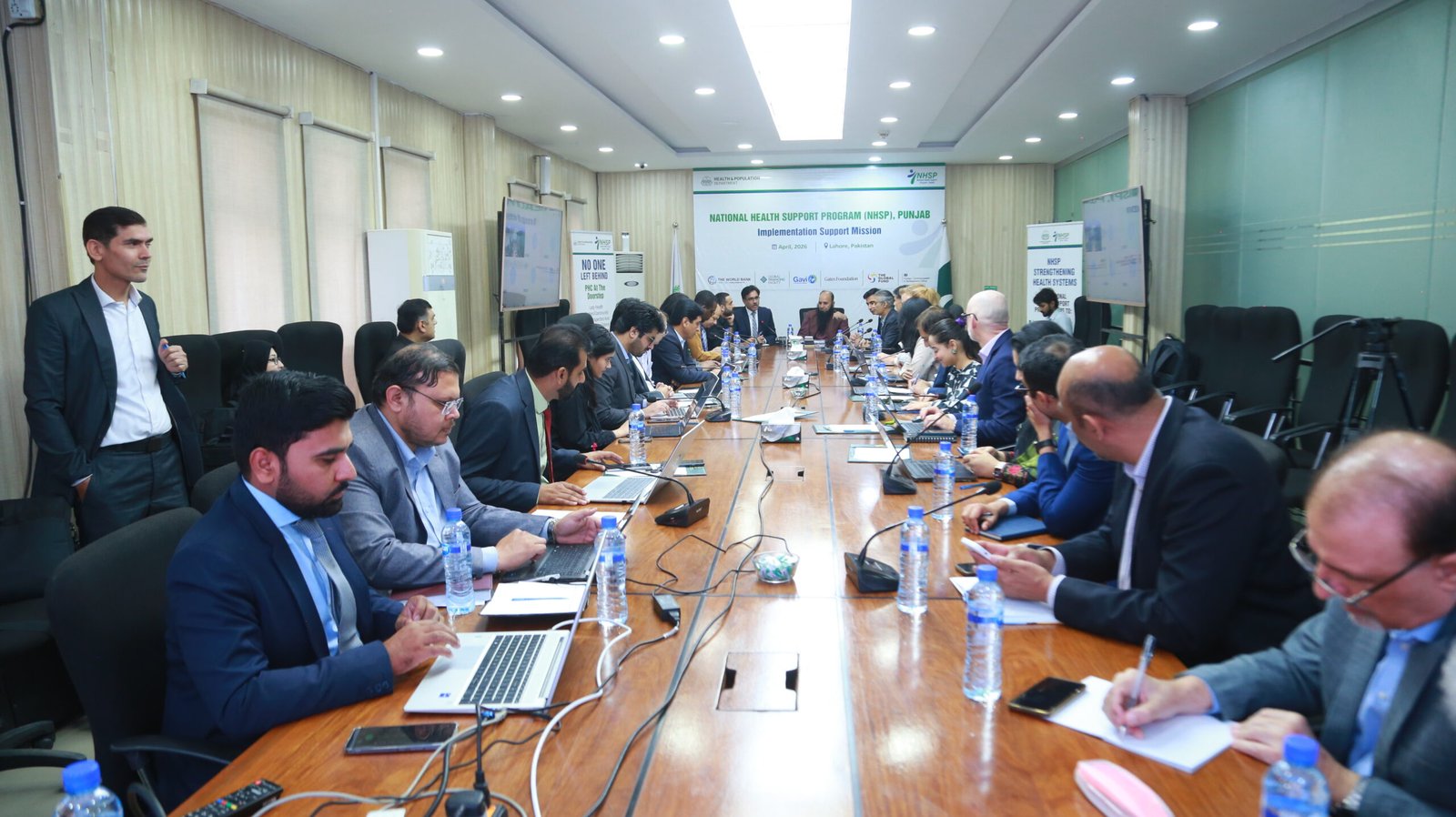
LAHORE (News Desk): Additional Secretary (Admn.)/ Project Director, National Health Support Programme (NHSP), Punjab Muhammad Ashraf, on Wednesday convened a Joint Implementation Support Mission of the World Bank, led by Task Team Leader, Senior Health Economist, Jahanzaib Sohail, along with development partners including the Global Fund, the Global Financing Facility (GFF), Gavi, FCDO, E4H and Gates Foundation to review progress on going primary health sector reforms in Punjab.
In his welcoming remarks to the participants, PD-NHSP stated that the National Health Support Program (NHSP), Punjab, is a strongly Primary Healthcare (PHC)-focused initiative. The Health and Population Department, Government of Punjab, is undertaking a wide range of reforms aimed at strengthening primary healthcare and improving service delivery mechanisms across the province. He reiterated that NHSP has been instrumental in supporting and advancing these reform efforts.
The World Bank Mission reviewed progress on key interventions, reforms, and system transformations being implemented to ensure equitable service delivery and enhance the quality of essential health services across Punjab.
On this occasion, Capt. (Retd.) Usman Ali presented a comprehensive briefing on the evolution of the PHC system in Punjab and the reform agenda under the Chief Minister’s health initiatives to foster and enable improved service delivery. He also shared a comparative analysis of health facilities before and after reforms and outsourcing, highlighting significant improvements following implementation, particularly under the pay-for-performance service delivery model. He further outlined NHSP-supported interventions that are contributing to strengthening the health system.
Program Directors from aligned programs, including TB, EPI, HISDU, Audit & Reforms, and MNCH, presented updates on their respective Disbursement Linked Indicators (DLIs), focusing on enhancing supply-side readiness at the primary healthcare level and advancing digital reforms to improve governance and accountability.
The Mission was also briefed on initiatives aimed at building capacity of healthcare providers through competency-based training via a Learning Management System (LMS), along with the establishment of skill and IT labs at the district level for hands-on practice. NHSP is further supporting the digitization of the Referral Management System (RMS). Following the development of RMS SOPs and protocols, an integrated referral checklist has been incorporated into the Electronic Medical Record (EMR) system to standardize referral processes.
Under this reform, all facility staff will be trained to ensure effective implementation of referral protocols. Emergency obstetric and pediatric cases will be referred from primary healthcare facilities to secondary and tertiary care through a digitalized referral mechanism.
The Mission was further informed about efforts to enhance community engagement through the Community Health Inspector (CHI) model, particularly in underserved and lagging areas of Punjab. Preventive healthcare services, including family planning, immunization (EPI), TB care, and other essential services, are being delivered at the community doorstep.
In this context, the National Health Support Programme is supporting the Chief Minister’s health initiatives to further strengthen service delivery and improve the quality of essential primary healthcare services across the province. Key interventions include Field Hospitals and Clinics on Wheels to expand access in remote and underserved areas. Additionally, the establishment of Level-I nurseries at Rural Health Centers is a critical step toward improving newborn care by ensuring timely management of neonatal complications and reducing preventable infant mortality at the primary healthcare level.
Through NHSP support, Integrated Screening Rooms are being established at Rural Health Centers (RHCs) for TB, Hepatitis, HIV, and non-communicable diseases (NCDs), while integrated screening camps at Basic Health Units (BHUs) are helping identify suspected TB cases within communities. Additionally, birth registration has been strengthened across the province, with all live births and stillbirths now being registered and reported to NADRA at health facilities across all 36 districts.
The World Bank Task Team Leader Jahanzaib Sohail and partners appreciated the Health Department’s reform initiatives and acknowledged the significant improvements in primary healthcare service delivery across Punjab.
The Mission meeting was attended by Additional Secretary (A&R) Adnan Shahzad, Director General Health Punjab Dr. Khalid Mehmood, PD EPI Dr. Naveed Akhtar, PD-PFFP Capt. (Retd.) Dr. Usman Ali Khan, PD-TB Dr. Talha Sherwani, DD-HISDU Khalid Sharif, DPD-PMU Rai Faisal Raza, and APD-MNHC Dr. Farrukh Amin.
Other participants included members of the PMU team, namely Budgeting Specialist Umaid Faisal, Communication Specialist Karamat Ali, Procurement Specialist Anayat Shah, E&SSS Ms. Yusra Naeem, M&E Officer Aqib Jan, FMA Maqbool Hussain, PSA Usman Ali, and M&EA Ahmad Sohaib.
From the World Bank, Provincial Technical Lead Dr. Ali Mirza, along with Abid Ali Khan, Saadiya Razzaq, Dr. Maham Ashfaq, Dr. Bilal, Dr. Shakeel, and Dr. Naseer Nizamani, also participated in the meeting, along with representatives of partner organizations.