
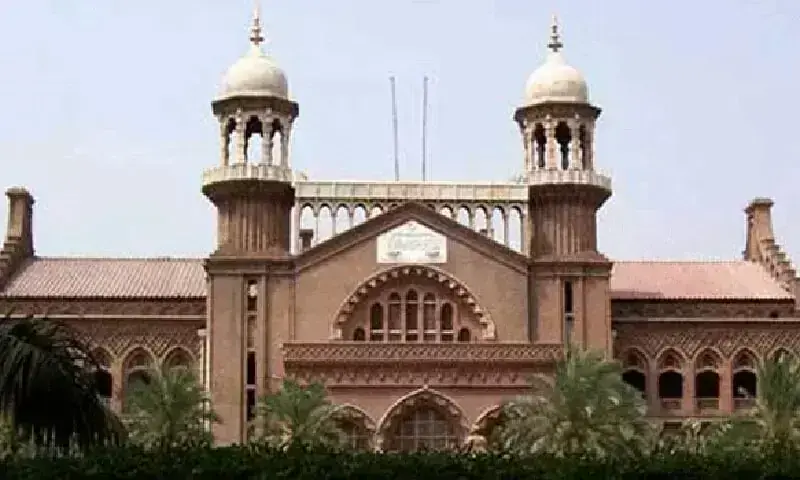
The Lahore High Court has delivered a significant ruling promoting gender equality by appointing Kalsoom Akhtar as the permanent lumberdar of a village in Lodhran, setting aside the earlier appointment of a male candidate.
The decision was issued by Justice Raheel Kamran, who found that the denial of marks to the petitioner under the “community” category was arbitrary, contradictory, and lacked any legal basis.
According to case details, the position became vacant after the death of Kalsoom Akhtar’s father, who had served as the village’s permanent lumberdar. The petitioner had also been performing duties as Sarbarah lumberdar for years and applied for the permanent position along with other candidates.
However, she was awarded zero marks under the community category on the assumption that she belonged to a sub-caste within the Gujjar community, while the selected candidate was considered part of the majority group.
In his judgement, Justice Kamran rejected this reasoning, stating that all major candidates belonged to the Gujjar community and that splitting the community into sub-classifications to deny marks had no lawful justification. The court termed the evaluation process flawed and based on an overly technical interpretation.
The court further noted that Kalsoom Akhtar had substantial administrative experience and familiarity with village affairs, having assisted her father and served in an acting capacity for many years.
Importantly, the judgement emphasized that there is no legal restriction preventing women from holding the office of lumberdar. The court highlighted constitutional principles of equality, inclusion, and fair participation, stressing that women must be evaluated on merit without bias.
Allowing the petition, the court directed relevant authorities to issue the appointment notification within 30 days. It also set aside previous orders by revenue authorities that had appointed the male candidate.
The ruling is being seen as a landmark step toward empowering women in rural governance and reinforcing equal opportunities in public offices traditionally dominated by men.