


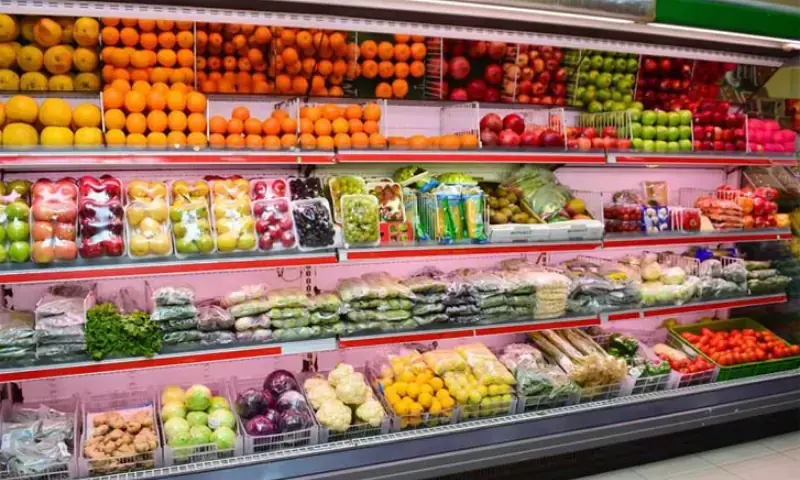
Pakistan’s food supply remains significantly misaligned with the country’s national dietary guidelines, with persistent shortages of vegetables, fruits, roots and tubers, and pulses, according to a new policy brief by the Food and Agriculture Organization (FAO). The report highlights an imbalance between the foods available across the country and the quantities needed to support healthy diets.
The FAO policy brief, titled Food Supply for Healthy Diets in Pakistan, warns that more than 60 per cent of Pakistanis cannot afford a healthy diet. Limited access to diverse, nutritious, safe and affordable food contributes to malnutrition, while diet-related noncommunicable diseases continue to rise alongside persistent undernutrition.
Pakistan introduced its food-based dietary guidelines in 2018 to provide evidence-based recommendations on the types and quantities of food needed for a healthy diet. However, the FAO report stresses that public awareness campaigns alone cannot improve nutrition if nutritious food is not sufficiently available or affordable.
The assessment compared Pakistan’s annual food supply with population-level requirements across 10 dietary food groups between 2010 and 2023. During this period, the country’s population grew from 189.3 million to 235.2 million, increasing pressure on the agricultural and food distribution systems. Pakistan’s population is projected to reach approximately 330 million by 2050, while climate change and other challenges are expected to place further demands on the agrifood sector.
According to the report, shortages of vegetables and fruits have widened over the years. The estimated vegetable supply gap increased from a range of 10.9 million to 17.8 million tonnes in 2010 to 13 million to 21.6 million tonnes in 2023. The fruit supply gap also grew, rising from 1.9 million to 10.3 million tonnes in 2010 to 3.9 million to 14.3 million tonnes in 2023.
The report also identifies shortages of roots and tubers, legumes and pulses. However, the supply of milk and milk products, meat and eggs showed improvement, while fats and oils moved from a small supply gap in 2010 into the estimated required range in subsequent years.
To address these imbalances, the FAO recommends coordinated fiscal and regulatory measures to align agricultural production and trade priorities with national nutritional needs. Its proposals include improving food distribution, reducing post-harvest losses and food waste, and encouraging greater demand for healthier food options.
The report further calls for updating Pakistan’s dietary guidelines to incorporate nutrition, public health and environmental priorities. It recommends nutrition education, behaviour-change initiatives, evidence-based taxes on foods and beverages high in sugar, salt and unhealthy fats, and front-of-package nutrition labels to help consumers make informed decisions.
The FAO also urges increased agricultural investment in vegetables, fruits, pulses, roots and tubers, alongside support for milk production in selected regions. Incentives for food processors to meet quality standards and reduce excessive salt, sugar and unhealthy fats are also among the proposed measures.
The findings underline the importance of improving food availability, affordability and distribution in Pakistan. Addressing supply shortages and strengthening nutrition-focused agricultural policies could help the country move closer to its dietary guidelines and improve access to healthier diets.