

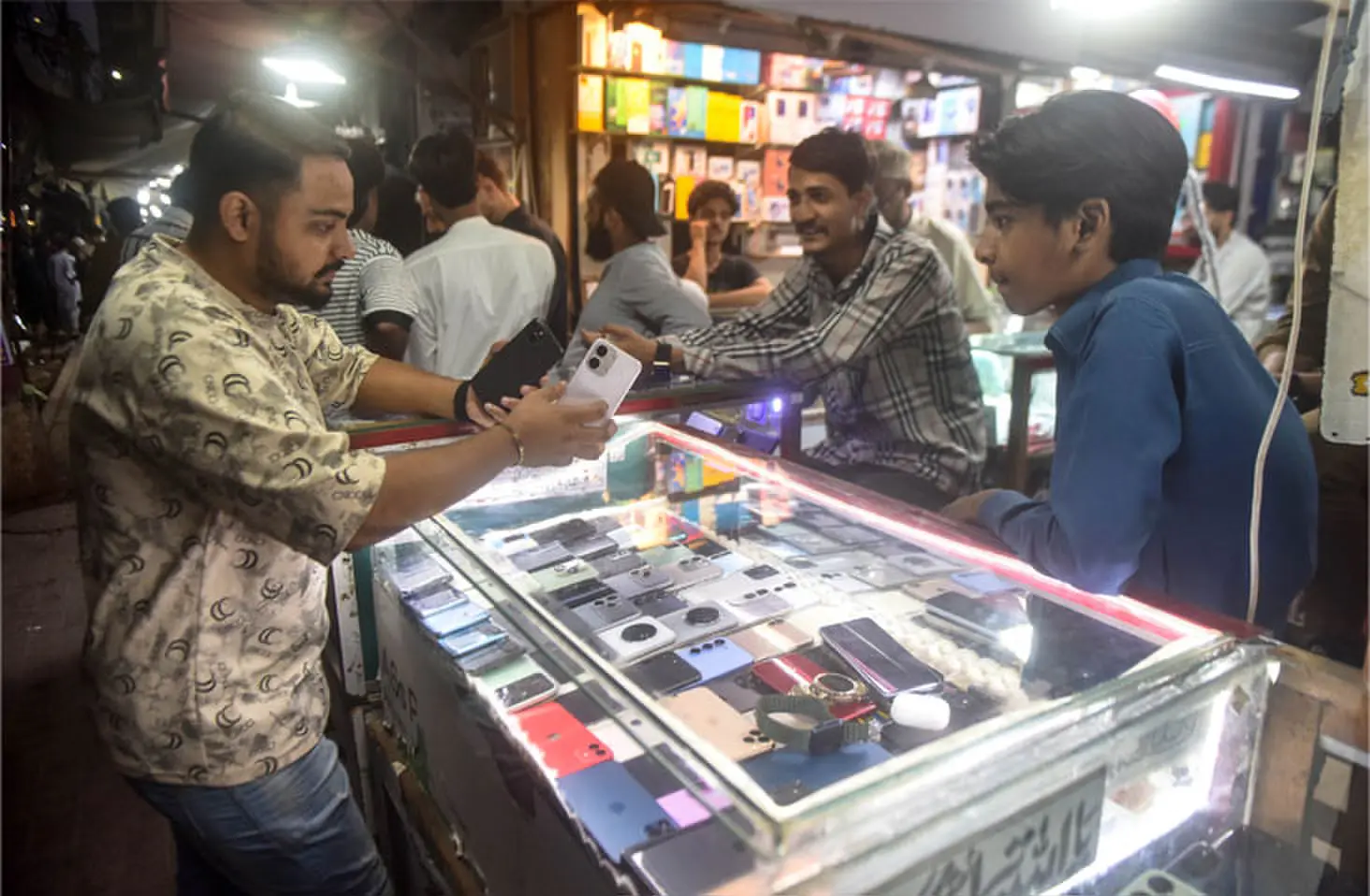
Smartphone prices have risen sharply in Karachi, making new mobile phones increasingly difficult to afford for budget-conscious consumers. According to a report by Dawn, major mobile phone brands have increased handset prices by Rs15,000 to Rs30,000, placing additional pressure on buyers, particularly those from low- and middle-income households.
A budget smartphone with 4GB of RAM and 64GB of storage, which previously cost around Rs20,000 to Rs22,000, is now being offered for approximately Rs35,000 to Rs40,000 in some cases. The increase has forced many consumers to reconsider their purchases, with some turning to used or refurbished phones because new devices are beyond their budgets.
Rising Memory Chip Costs Behind Smartphone Price Hikes
Industry representatives have attributed much of the price increase to the rising cost of memory components rather than a significant increase in government taxes. Muhammad Rizwan Irfan, president of the Karachi Electronics Dealers Association, said higher chip costs were a major factor behind the changing prices.
Mian Abdul Rehman of the Pakistan Mobile Phone Manufacturers Association also pointed to rising costs for RAM and ROM. He explained that growing demand for memory components from artificial intelligence companies, robotics and data centres has increased pressure on supplies, while production has not expanded at the same pace.
According to Rehman, manufacturers are finding it increasingly difficult to absorb these higher component costs, contributing to more expensive smartphones. The report also noted that some consumers have associated the price increases with international trade disruptions and import-related concerns, although the industry representatives quoted identified memory costs as a key factor.
Budget Smartphones Become Harder to Afford
The price surge is particularly challenging for people who depend on smartphones for education, employment, online transport services, banking, government applications and communication with family members. For many households, a reliable smartphone has become an essential tool for everyday activities rather than simply a device for entertainment.
The higher prices have led some buyers to consider used handsets and so-called kit phones, which are refurbished devices imported in bulk without standard retail packaging. However, some consumers remain concerned about the reliability and condition of these alternatives compared with new smartphones.
Mobile phone retailers have also reported a slowdown in sales. Shopkeepers told Dawn that customers who previously purchased handsets priced around Rs20,000 are now struggling to afford devices costing Rs30,000 or more. Dealers also cited uncertainty caused by fluctuating prices and supply shortages.
Students and Working Consumers Face Difficult Choices
Consumers interviewed in Karachi described how the price increases have disrupted their purchasing plans. One father visiting Saddar Mobile Market to buy a phone for his daughter, who had recently started college, said the model he wanted had risen from approximately Rs22,000–Rs23,000 in August to around Rs30,000, with further increases reported the following month.
Unable to cover the additional expense within his salary and budget, he considered purchasing a used handset or switching to a basic keypad phone. Other buyers described similar difficulties in finding affordable smartphones capable of running essential applications.
A working woman said she had to use her savings to purchase a replacement phone because she needed a reliable device for her job. Another consumer, whose phone had been snatched near KDA Chowrangi, said he was struggling to find a suitable handset within a budget of Rs25,000 to Rs30,000.
These accounts illustrate how rising handset prices can affect access to digital services, particularly for people who cannot easily increase their spending.
Consumers Call for Government Action
Consumers have urged the government to explore measures that could keep smartphones with basic specifications affordable. Some questioned the contrast between efforts to expand digital services and the increasing cost of the devices needed to access them.
One buyer suggested that the government consider an agreement with a mobile phone manufacturer to supply basic smartphones at affordable prices. Others called for measures to help ensure that essential government applications, online banking and educational services remain accessible to ordinary citizens.
With smartphone prices under pressure from rising component costs and reported supply challenges, affordability remains a major concern for Karachi’s mobile phone market. Consumers and retailers are seeking greater price stability, while industry representatives point to increasing demand for memory components as an important factor behind the trend.