

KU Exam Boycott Enters Second Month, Impacting Nearly 50,000 Students
KARACHI – Nearly 50,000 students at the University of Karachi are experiencing growing academic uncertainty as a teachers’ boycott of semester examinations has entered its second month, disrupting academic activities and delaying the university’s examination schedule.
The boycott began on May 5 after teachers raised concerns regarding the non-payment of various outstanding dues. Since then, semester examinations have remained suspended, leaving thousands of students uncertain about their academic future and the completion of the ongoing semester.
Faculty members, along with administrative officers and non-teaching staff, have continued their protest against what they describe as delays in the payment of legitimate financial claims. Their demands include the immediate release of pending dues related to evening classes, paper checking, examination supervision, paper setting, house ceiling allowance, leave encashment, and other outstanding payments.
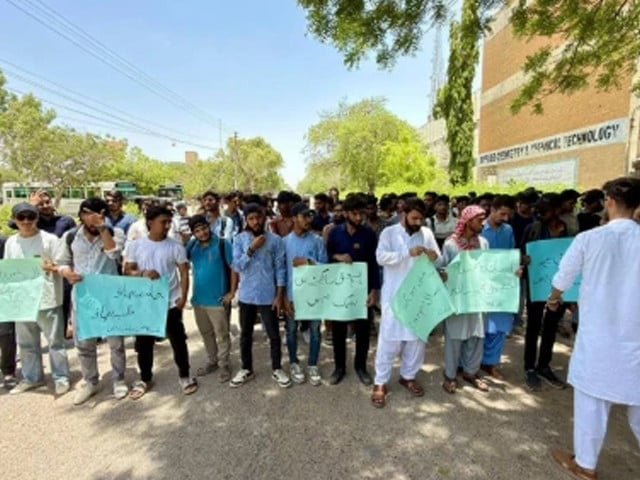
As part of the ongoing protest campaign, teachers and university employees recently staged a demonstration outside the administration block of the University of Karachi. Participants called upon university authorities to resolve the matter promptly and ensure the payment of all pending financial obligations.
The prolonged boycott has significantly affected the university’s academic operations. Semester examinations have been postponed indefinitely, creating uncertainty for thousands of students who were preparing to complete their courses and move forward with their academic programs.
Students and parents have expressed concern over the continuing delay, fearing that the disruption could negatively affect the academic calendar. Many worry that shortened semesters, compressed schedules, and adjustments to future academic activities may become necessary if the situation remains unresolved.
Education experts note that prolonged examination delays can have lasting consequences for students, including interruptions in degree completion, admission timelines for higher education programs, scholarship opportunities, and employment plans for graduating students.
The University of Karachi is one of Pakistan’s largest public-sector universities and serves tens of thousands of students across various academic disciplines. Any extended disruption to examinations and academic activities can therefore affect a significant portion of the student community.
Parents have urged both university management and employee representatives to engage in constructive dialogue and reach a mutually acceptable solution. Many believe that resolving the financial dispute quickly is essential to prevent further academic losses for students.
Teachers maintain that their demands relate to payments that have been pending for an extended period and argue that addressing these issues is necessary for the welfare of university employees. Protest leaders have emphasized that the boycott will continue until satisfactory progress is made regarding the release of dues and allowances.
University students, meanwhile, continue to await an official announcement regarding revised examination dates and the future academic schedule. Many have expressed frustration over the uncertainty, noting that the delay is affecting their study plans and overall educational progress.
The situation highlights broader challenges faced by higher education institutions regarding financial management, employee welfare, and academic continuity. Stakeholders hope that discussions between university authorities and employee representatives will lead to a timely resolution that protects both staff rights and student interests.
As the boycott enters its second month, attention remains focused on efforts to end the dispute and restore normal academic operations at Karachi University. Until an agreement is reached, thousands of students will continue facing uncertainty regarding their examinations and academic future.