
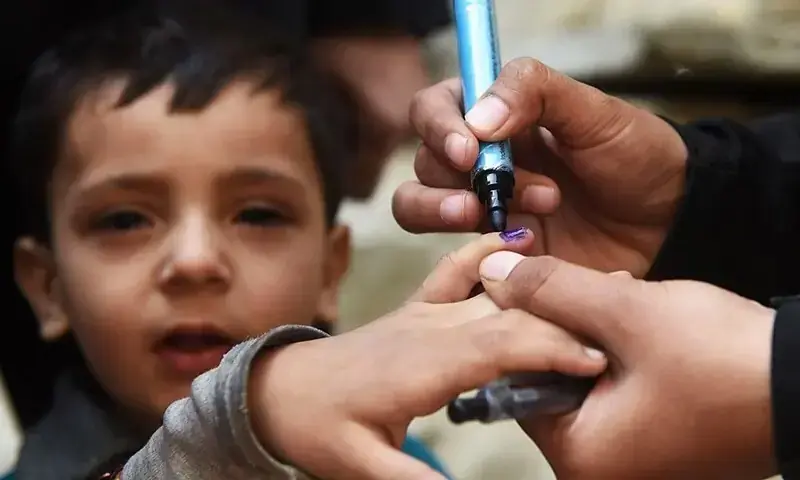
Khyber Pakhtunkhwa has recorded a continued decline in polio vaccine refusal cases and the number of children missed during door-to-door immunisation campaigns, particularly in high-risk districts. While the improvement reflects progress in public awareness and vaccination efforts, health experts warn that stronger legal measures are necessary to completely eradicate polio from Pakistan.
Medical experts have urged the Khyber Pakhtunkhwa government to introduce legislation making polio vaccination compulsory for all eligible children. They pointed to the Polio Eradication and Rehabilitation Bill 2026, passed by the National Assembly on May 13, as a model for provincial implementation.
Under the proposed federal legislation, anti-polio vaccination would become mandatory for every eligible child in Islamabad Capital Territory. Parents or guardians would not be permitted to refuse immunisation unless they provide a valid medical contraindication certificate issued by authorised healthcare professionals.
The bill proposes strict penalties for repeated refusal of anti-polio vaccination. Individuals deliberately obstructing vaccination campaigns could face fines ranging from Rs50,000 to Rs100,000, while courts would also have the authority to impose imprisonment on those interfering with vaccine administration.
In addition, the proposed legislation links proof of immunisation to certain public services. Students may be required to provide vaccination records for university admissions, while citizens seeking passports could also be asked to present evidence of complete immunisation.
Health specialists believe such measures could significantly improve vaccination coverage across the country. They note that despite support from international organisations and UN agencies, vaccine hesitancy remains one of the biggest obstacles to achieving complete eradication of the poliovirus.
During the four-day anti-polio campaign conducted in May across 23 high-risk districts of Khyber Pakhtunkhwa, health workers successfully vaccinated approximately 97 percent of the targeted 4.6 million children.
Despite the encouraging performance, a total of 94,459 children remained unvaccinated. Official figures revealed that 74,864 children were absent from their homes when vaccination teams visited, while the parents of 19,805 children refused to allow immunisation.
Healthcare workers continue to perform their duties under challenging circumstances. Security threats against vaccination teams remain a serious concern, especially in sensitive districts.
In Bajaur tribal district, two police personnel assigned to protect polio workers lost their lives after unidentified attackers opened fire during the campaign. Since 2012, more than 110 police officers and health workers have been killed or injured while participating in anti-polio activities.
Paediatric experts stress that Pakistan must vaccinate every child under the age of five and maintain zero reported polio cases for three consecutive years before being declared polio-free.
According to specialists, achieving a 95 percent vaccination rate is not sufficient if pockets of unvaccinated children continue to exist. Even small gaps in immunisation can allow the virus to circulate and threaten previous gains.
Pakistan has reported three confirmed polio cases so far this year, including one case in Sindh and two cases in Khyber Pakhtunkhwa. The KP cases were identified in North Waziristan and Bannu, involving children who had not received routine immunisation and lacked protective immunity.
Last year, Pakistan recorded 31 polio cases nationwide, with 20 cases reported from Khyber Pakhtunkhwa alone. Southern districts remained the most affected, including North Waziristan, Tank, Lakki Marwat, Bannu, Torghar, and Dera Ismail Khan.
The Emergency Operations Centre (EOC), responsible for leading anti-polio initiatives, continues to strengthen security arrangements and campaign planning. However, experts maintain that reaching 100 percent immunisation coverage remains difficult as long as vaccine refusal persists.
Public health professionals believe that stronger legislation, community engagement, enhanced awareness campaigns, and improved security for frontline workers are all essential components of Pakistan’s fight against polio.
As the country moves closer to eradication goals, experts emphasise that every child vaccinated represents another step toward a healthier future and the eventual elimination of one of the world’s most persistent infectious diseases.