
Pakistan’s Non-Interest Current Expenditure Rises 18.8% in 9MFY26 Despite Lower Overall Spending
ISLAMABAD – Pakistan’s non-interest current expenditure increased by 18.8 percent during the first nine months of fiscal year 2025-26, according to a report presented by the Planning Commission to the Annual Plan Coordination Committee. The increase came despite an overall decline in total government expenditure and signs of weakening national savings and energy sector performance.
The report highlights key fiscal and economic trends during July-March FY26, indicating improvements in revenue collection and fiscal management while also identifying challenges in savings, investment, and energy production.
Non-Interest Spending Records Significant Increase
According to the Planning Commission, non-interest current expenditure grew primarily due to increased spending on defence, grants, and provincial current expenditures.
Although these expenditures rose substantially, total government spending declined by 4.2 percent compared to the same period last year. Total expenditure stood at Rs15.656 trillion during July-March FY26.
The report further revealed that overall current expenditure decreased by 2.2 percent, while development expenditure increased significantly by 26.8 percent, reflecting greater emphasis on development projects and public investment.
Debt Servicing Eases Fiscal Pressure
One of the major factors supporting improved fiscal performance was a decline in debt servicing costs.
Domestic debt servicing fell by 25.9 percent during the period under review, while foreign debt servicing recorded a marginal increase of 0.6 percent.
The reduction in domestic interest payments helped contain the fiscal deficit and improved the government’s overall financial position. The Planning Commission described Pakistan’s fiscal performance during the third quarter of FY26 as considerably improved compared to previous years.
Revenue Collection Shows Strong Growth
The report indicated that total government revenue reached Rs14.799 trillion during July-March FY26, representing a 10.7 percent increase from Rs13.367 trillion recorded during the corresponding period last year.
The rise in revenue was driven largely by improved tax collection performance.
Tax revenues increased by 11.3 percent, supported by a 10.1 percent growth in collections by the Federal Board of Revenue (FBR).
Direct taxes recorded growth of 12.4 percent, while indirect taxes increased by 7.9 percent. Non-tax revenues also showed healthy performance, rising by 9.5 percent during the reporting period.
Federal non-tax revenue increased by 8.2 percent, mainly due to profits transferred by the State Bank of Pakistan, higher petroleum levy collections, investment dividends, and oil and gas royalties.
Provincial non-tax revenue witnessed even stronger growth, increasing by 36.7 percent to reach Rs277.5 billion. Officials attributed this rise primarily to higher hydroelectric power profits.
National Savings Fall Below Target
Despite improvements in revenue generation, the report highlighted concerns regarding declining national savings.
National savings stood at 14.1 percent of GDP, compared to 14.9 percent in the previous year and below the annual target of 14.3 percent.
Domestic savings also declined from 7.9 percent to 7 percent of GDP.
The Planning Commission stated that stronger consumption patterns in a recovering economy contributed to the decline in domestic savings.
Meanwhile, foreign savings improved from negative 0.5 percent to positive 0.2 percent of GDP, providing additional support to the country’s resource availability.
Investment Remains Below Expectations
The report showed that total investment remained unchanged at 14.4 percent of GDP during FY26.
While investment levels remained stable despite economic and external challenges, they still fell short of the official target of 14.7 percent of GDP.
Economic planners believe that increasing investment levels will be essential for sustaining long-term economic growth, creating employment opportunities, and improving productivity across various sectors.
Energy Sector Faces Major Contraction
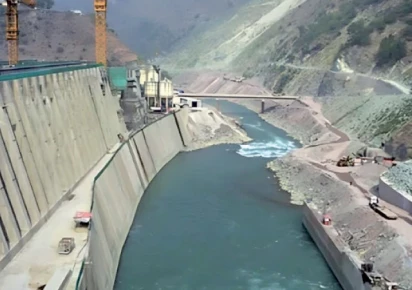
The Planning Commission also reported a significant slowdown in the energy sector, which contracted by 10.6 percent during the fiscal year.
The decline affected electricity generation, natural gas supply, and water-related services.
Officials attributed the contraction partly to a high base effect, as the energy sector had recorded exceptional growth of 29.6 percent during the previous year.
Natural gas supply declined by 2.6 percent, while crude oil production fell by 0.3 percent.
The report also highlighted ongoing challenges in mineral exploration and extraction activities, which continue to affect the sector’s overall performance.
Another factor influencing growth was the reduction in energy subsidies. Budgeted subsidies were lowered to Rs893 billion compared to Rs1.19 trillion in the previous fiscal year.
The commission noted that modest output growth by WAPDA and related entities, along with lower sectoral price growth, also contributed to weaker nominal expansion within the energy sector.
Economic Outlook
The Planning Commission report presents a mixed picture of Pakistan’s economy. Stronger revenue collection, reduced domestic debt servicing costs, and increased development spending indicate improvements in fiscal management.
However, declining national savings, investment levels below target, and contraction in the energy sector remain important challenges that policymakers will need to address in order to sustain economic growth and improve long-term economic stability.
The findings are expected to play a key role in shaping future fiscal and economic policies as the government prepares development and budgetary strategies for the upcoming financial year.