
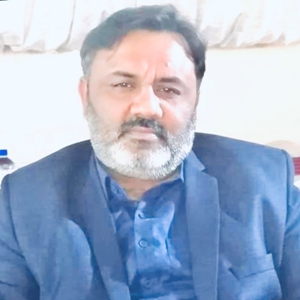


Centre Seeks Rs1.7 Trillion Cut in Provincial NFC Share, Says KP Finance Adviser
ISLAMABAD – Khyber Pakhtunkhwa Finance Adviser Muzammil Aslam has claimed that the federal government is seeking a reduction of Rs1.7 trillion in the provinces’ share under the National Finance Commission (NFC) Award, while also urging provincial governments to increase tax collection and contribute toward fertiliser subsidies.
Speaking at a press conference in Islamabad, Aslam said the federal government wants to revisit the current NFC formula because it is dissatisfied with its existing share of the divisible pool. According to him, discussions between the federation and provinces on resource distribution have failed to produce consensus.
Federal Government Seeks Review of NFC Award
Aslam stated that during a meeting chaired by Finance Minister Muhammad Aurangzeb a few months ago, the federal government proposed changes to the divisible pool by excluding customs duty and federal excise duty from the taxes shared between the Centre and provinces.
He said the proposal effectively aimed to reduce provincial allocations by approximately Rs1.7 trillion. However, the discussions ended without any agreement among stakeholders.
Under the current NFC Award, provinces receive 57.5 percent of the divisible pool, while the federal government receives the remaining 42.5 percent.
For the ongoing fiscal year, provincial governments were expected to receive approximately Rs8.2 trillion based on the Federal Board of Revenue’s tax collection target of Rs14.13 trillion.
According to Aslam, the FBR is now projected to miss its revenue target by more than Rs1 trillion, marking the second consecutive year in which collections are expected to fall short by over Rs1 trillion.
Provincial Contributions Proposed
The KP finance adviser said the federal government also requested direct financial contributions from provinces.
According to his claims, Punjab was asked to contribute between Rs700 billion and Rs800 billion, Sindh around Rs500 billion, Khyber Pakhtunkhwa approximately Rs200 billion, and Balochistan close to Rs100 billion.
He argued that these proposals have generated concern among provincial administrations already facing fiscal pressures and budget constraints.
Additional Tax Collection Demands
Aslam further alleged that the federal government requested provinces to generate an additional Rs430 billion through taxation.
He said federal authorities informed provincial governments that there was little room left for the Centre to impose further taxes and that provinces should instead raise additional revenue.
According to Aslam, all provincial governments responded by saying they lacked the capacity to impose such a large additional tax burden on citizens.
He noted that Khyber Pakhtunkhwa was initially asked to collect Rs35 billion in additional taxes. However, the province later received another communication increasing the demand to Rs65 billion.
The KP government, he said, did not accept the revised proposal.
Fertiliser Subsidy Sharing Proposal
The adviser also revealed that provinces were asked to share the cost of fertiliser subsidies.
According to him, Khyber Pakhtunkhwa was requested to contribute Rs2 billion, while Punjab was asked to provide Rs55 billion toward subsidy funding.
The proposal comes as the federal government seeks ways to manage fiscal pressures and create space within the upcoming budget.
Budget Delays and Coalition Consultations
The remarks come amid reports that disagreements over resource allocation and expenditure priorities have contributed to delays in finalising the federal budget for fiscal year 2026-27.
The government had initially planned to present the budget earlier, but unresolved issues reportedly delayed the process.
Deputy Prime Minister Ishaq Dar later confirmed that the federal budget would be presented on June 10.
Meanwhile, Finance Minister Muhammad Aurangzeb has continued consultations with coalition partners, including the Pakistan Peoples Party (PPP), regarding development spending, welfare measures, fiscal sustainability, and broader economic priorities.
PPP leaders have reportedly opposed the introduction of new taxes and instead advocated expanding the tax base by bringing more individuals and businesses into the tax net.
Concerns Over Development Allocations
During the press conference, Aslam also criticized federal development spending allocations.
He claimed that out of a proposed federal development budget of Rs1.126 trillion, only Rs2.2 billion had been allocated for projects in Khyber Pakhtunkhwa, compared to Rs225 billion for Balochistan and Rs150 billion for Sindh.
The adviser argued that the allocation did not adequately reflect the province’s development requirements.
IMF and Fiscal Challenges
Responding to questions about economic management, Aslam stated that a trust deficit exists between the federal government and the International Monetary Fund (IMF).
According to him, this has made it difficult for the federal government to secure approval for various policy proposals.
He also urged international financial institutions to consider the unique economic circumstances of Khyber Pakhtunkhwa and Balochistan, arguing that both provinces have been heavily affected by security challenges and face limited economic growth opportunities.
Debate Over Resource Distribution Continues
The issue of NFC resource distribution remains one of Pakistan’s most significant fiscal and constitutional matters. The NFC Award determines how federal tax revenues are divided between the Centre and provinces and plays a crucial role in financing provincial budgets, public services, and development projects.
With budget discussions intensifying ahead of the new fiscal year, debates over revenue sharing, taxation, subsidy funding, and development spending are expected to remain central to negotiations between the federal and provincial governments.