
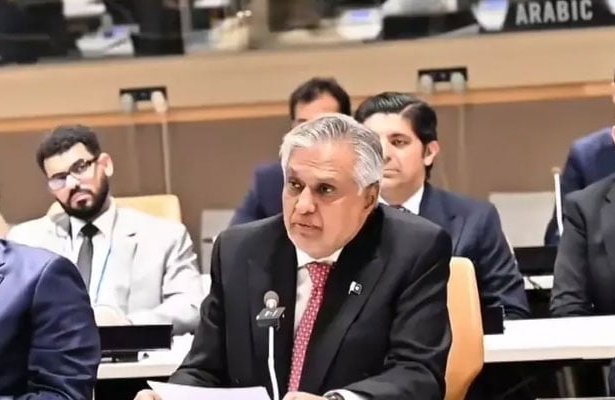
Deputy Prime Minister and Foreign Minister Ishaq Dar has expressed serious concern over the security and humanitarian situation in Afghanistan, urging the Taliban authorities to take effective measures to prevent terrorist groups from operating from Afghan soil.
Addressing a meeting of the Organisation of Islamic Cooperation (OIC) Contact Group on Afghanistan, Dar said Pakistan remained deeply concerned about the presence of terrorist groups in Afghanistan and their potential impact on neighbouring countries.
Referring to the recent terrorist attack in Kohat, which reportedly claimed 24 lives, the foreign minister stressed that Afghan territory must not be allowed to be used for attacks against neighbouring states.
Dar urged the Taliban government to fulfil its responsibility by taking concrete steps to prevent terrorist groups from using Afghan territory. He emphasised the importance of addressing security threats in order to support regional peace and stability.
The deputy prime minister also highlighted concerns over other challenges linked to Afghanistan, including drugs, illegal weapons and human trafficking. He called for stronger efforts to prevent these activities and reduce their impact on Afghanistan and neighbouring countries.
During the meeting, Dar also raised concerns over restrictions on the education of Afghan girls and employment opportunities for women. He called for greater attention to the rights, education and future prospects of Afghan women and girls.
The foreign minister further said that the international community should share responsibility for challenges arising from the return of Afghan refugees. He stressed that the burden of refugee repatriation should not fall solely on countries directly affected by the process.
Dar emphasised that continued international engagement is needed to address Afghanistan’s security, humanitarian and economic challenges. He also called for collective efforts to promote peace and stability in Afghanistan and the wider region.
His remarks come amid continued discussions over Afghanistan’s security situation, cross-border terrorism, refugee repatriation and the humanitarian challenges facing the country.